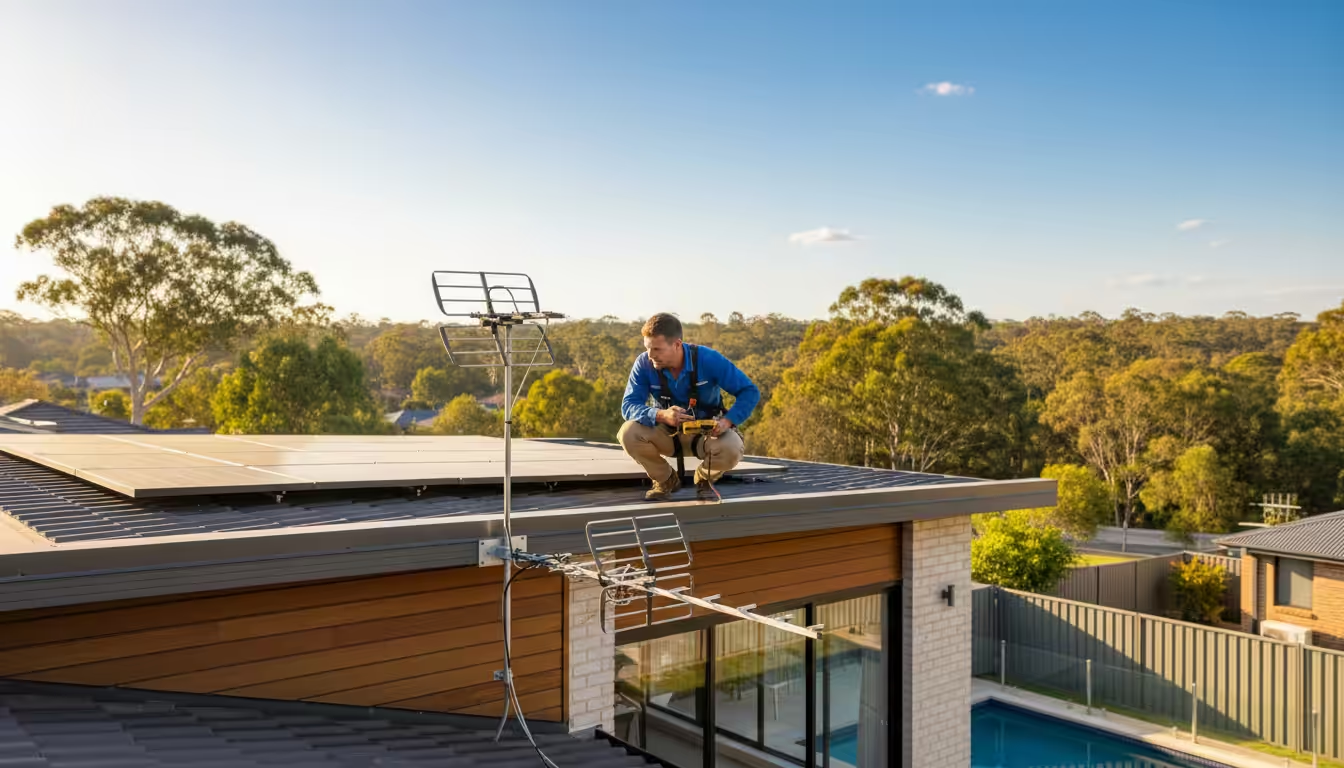
When your TV reception deteriorates, the decision between antenna replacement Sydney services and simple repairs can significantly impact both your viewing experience and your budget. As an ACMA-registered cabler who has assessed thousands of antenna systems across Greater Sydney, I regularly help homeowners understand when repair work provides good value and when full replacement is the smarter investment. Understanding the technical factors that determine this choice ensures you make an informed decision that delivers reliable reception for years to come.
According to the Australian Communications and Media Authority (ACMA), over 13.5 million Australians still rely on free-to-air television, making antenna maintenance and replacement decisions critical for millions of households. While some reception issues stem from minor problems that qualified cablers can repair quickly and affordably, others indicate fundamental antenna degradation that only replacement can address. Recognising the 5 signs your TV antenna needs repair provides the diagnostic baseline for this decision.
The Australian Bureau of Statistics (ABS) reports that 65% of Australian households use free-to-air television as their primary or secondary viewing source, demonstrating ongoing demand for reliable antenna systems. This article examines the technical and financial factors that determine whether repair or replacement represents the best value for your specific situation.
When Repair Is the Right Choice
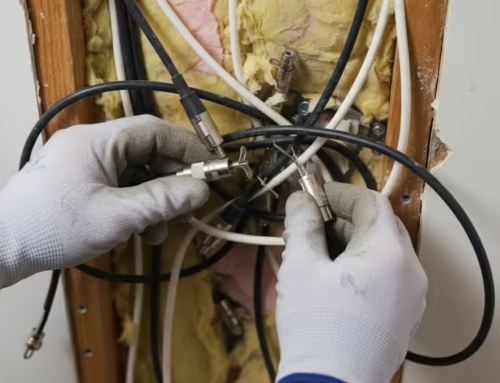
Antenna repairs make economic sense when the underlying antenna structure remains sound and the issue stems from repairable components rather than fundamental degradation. Minor problems that licensed cablers can address cost-effectively include corroded F-type connectors, loose mast clamps, damaged coaxial cable sections, or misaligned antenna orientation following severe weather events.
If your antenna is less than eight years old, shows no visible rust or corrosion on its elements, and the mounting hardware remains structurally sound, repair typically provides excellent value. According to ACMA licensing records, only registered cablers holding Open Cabler Registration under the ACMA Cabling Provider Rules 2014 can legally perform antenna installation and repair work, ensuring consumer protection and technical standards. Understanding how to know when it’s time to fix or replace your antenna helps clarify which category your situation falls into.
Repairable issues typically present as intermittent reception problems rather than complete signal loss, affect only specific channels rather than all broadcasts, or correlate directly with recent weather events. When Sydney Cabling’s lead technician Fred inspects an antenna system, he evaluates the physical condition of antenna elements, the integrity of all connections, the quality of the coaxial cable run, and the performance of any distribution amplifiers or splitters in the signal path.
Important:
Clear Signs You Need Antenna Replacement, Not Repair
Certain technical indicators clearly point toward replacement rather than repair. Severe rust or corrosion on antenna elements fundamentally compromises the antenna’s ability to receive UHF signals effectively, as corroded metal changes the electrical properties that determine antenna gain and frequency response. When corrosion penetrates beyond surface oxidation into the aluminium or steel elements themselves, no repair can restore proper signal reception.
Physical damage to antenna elements presents another clear replacement indicator. Bent or broken dipoles, damaged reflector screens, or compromised boom structures alter the antenna’s designed radiation pattern and gain characteristics. While minor adjustments can sometimes restore alignment, significant structural damage typically requires full antenna replacement to achieve reliable signal strength across all broadcast channels.
Signal strength measurements provide objective data for this decision. When an ACMA-registered cabler measures signal strength in dBm at your television input and finds levels consistently below -65 dBm despite proper antenna orientation toward Sydney’s main transmitters at Artarmon and Gore Hill, antenna degradation is likely the cause. Modern digital tuners require minimum signal levels of approximately -70 dBm for reliable reception, with optimal performance occurring between -50 dBm and -60 dBm.
- ✓
Inspect antenna elements for visible rust, corrosion, or physical damage from ground level using binoculars - ✓
Document specific reception problems: which channels pixelate, time of day issues occur, and weather conditions affecting signal - ✓
Check the age of your current antenna — if installed before 2010, it may predate digital TV optimisation - ✓
Test signal strength on multiple TVs if possible to determine whether the issue is antenna-related or internal cabling
Age and Weather Damage: Key Replacement Indicators
Communications Alliance data shows that properly installed and maintained TV antennas have a service life of 10-15 years, with coastal installations experiencing 20-30% shorter lifespans due to salt corrosion. In Sydney’s coastal suburbs including Coogee, Manly, Vaucluse, and Maroubra, salt-laden air accelerates corrosion of aluminium elements and steel mounting hardware, often necessitating replacement after 8-12 years even with regular maintenance.
Weather damage accumulates over time through repeated exposure to wind loading, thermal cycling, and UV radiation. Sydney’s summer storms can generate wind gusts exceeding 90 km/h, placing significant stress on antenna mounting systems. While a single weather event rarely destroys a properly installed antenna, cumulative exposure gradually loosens mast clamps, fatigues mounting brackets, and stresses the connection points between antenna elements and the boom structure.
Understanding how weather affects your antenna helps homeowners recognise when environmental factors have compromised antenna integrity beyond economical repair. When Fred from Sydney Cabling inspects antennas in suburbs like Bayview, Forestville, and St Ives, he specifically examines mounting hardware for stress fractures, checks element connections for looseness or corrosion, and evaluates whether the antenna’s physical condition warrants continued service or replacement.
By the Numbers
- STATCommunications Alliance data shows that properly installed and maintained TV antennas have a service life of 10-15 years, with coastal installations experiencing 20-30% shorter lifespans due to salt corrosion
- STATAccording to the Australian Bureau of Statistics (ABS), 65% of Australian households use free-to-air television as their primary or secondary viewing source
- STATAccording to ACMA licensing records, only registered cablers holding Open Cabler Registration under the ACMA Cabling Provider Rules 2014 can legally perform antenna installation and repair work
Cost Comparison: Repair vs Replacement in Sydney
Financial analysis of repair versus replacement requires consideration of both immediate costs and long-term value. Minor antenna repairs typically cost between $150 and $300, covering work such as replacing corroded F-type connectors, tightening loose mounting hardware, or reorienting the antenna for optimal signal reception. These repairs make economic sense when the antenna structure remains fundamentally sound and the issue stems from a specific, repairable component.
Full antenna replacement ranges from $300 to $800 depending on antenna type, roof access requirements, and the complexity of the installation. Understanding average TV aerial installation costs in Sydney provides context for this investment. According to NSW Fair Trading guidelines, if repair costs exceed 60% of replacement cost, replacement typically represents better value, particularly when the antenna approaches or exceeds its expected service life.
Sydney Cabling’s experience across over 40,000 completed jobs shows that homeowners who invest in quality replacement antennas with proper installation typically enjoy 10-15 years of reliable service, while repeated repairs on degraded antennas often lead to recurring service calls and cumulative costs that exceed replacement pricing within 2-3 years.
- ✓
Get quotes from at least two ACMA-registered cablers, comparing repair costs against full replacement pricing - ✓
Ask about antenna gain specifications (measured in dBi) and whether the proposed replacement suits your distance from Sydney transmitters - ✓
Verify the cabler holds current ACMA Open Cabler Registration and provides warranty coverage on parts and labour - ✓
Confirm whether your roof type, pitch, and mounting location require specialised brackets or additional safety equipment
Technology Upgrades: When Older Antennas Can’t Keep Up
Antennas installed before 2010 were designed for analogue television signals and often lack the optimised element spacing and gain characteristics required for digital DVB-T broadcasts. While these older antennas can receive digital signals, they typically deliver suboptimal performance compared to modern digital-specific designs, particularly in fringe reception areas or locations with signal interference from 4G and 5G mobile networks.
Modern high-gain antennas designed specifically for digital reception offer typical gain improvements of 3-6 dBi for UHF signals compared to older analogue-era designs. This increased gain translates directly to improved signal strength at your television input, better resistance to interference, and more reliable reception during marginal conditions such as atmospheric ducting or weather-related signal degradation.
According to the Australian Communications and Media Authority (ACMA), properly oriented high-gain antennas can receive signals up to 80km from Sydney’s main transmitters, covering all Greater Sydney suburbs including Lindfield, Killara, Castle Hill, Seven Hills, and Dural. Modern antennas also feature improved rejection of mobile phone signals in the 700MHz and 2300MHz bands, reducing the pixelation and signal dropouts that affect older antenna designs in areas with strong mobile network coverage.
Signal Strength Issues That Require Full Replacement
Persistent signal strength problems despite repairs indicate fundamental antenna degradation that only replacement can address. When signal levels measured at the television input consistently fall below -65 dBm across multiple channels, and the coaxial cable run and all connections test satisfactory, antenna performance has degraded beyond economical repair.
Modulation Error Ratio (MER) measurements provide additional diagnostic information. Digital television requires minimum MER values of approximately 25 dB for reliable reception, with optimal performance occurring above 30 dB. When an ACMA-registered cabler measures MER values consistently below threshold despite proper antenna orientation and connection integrity, antenna element degradation typically causes the problem.
Signal-to-noise ratio degradation often accompanies physical antenna deterioration. Corroded elements and compromised electrical connections introduce noise into the received signal, reducing the effective signal-to-noise ratio even when raw signal strength appears adequate. This manifests as pixelation, audio dropouts, and complete signal loss during marginal reception conditions.
Choosing the Right Replacement Antenna for Your Sydney Location
Selecting an appropriate replacement antenna requires consideration of your distance from Sydney’s main transmitters at Artarmon and Gore Hill, local terrain and building obstructions, and whether you require VHF reception for specific channels. The guide to choosing the best TV antenna for Sydney homes provides detailed information on antenna selection criteria.
Properties within 20km of Sydney’s CBD typically achieve excellent reception with standard gain antennas rated at 8-10 dBi. Suburbs including Brookvale, Manly, Coogee, and Vaucluse fall within this strong signal area, where antenna selection focuses primarily on build quality and weather resistance rather than maximum gain.
Properties 20-40km from transmitters, including areas like Castle Hill, Dural, and Seven Hills, benefit from medium-gain antennas rated at 10-14 dBi. These antennas provide additional signal margin that ensures reliable reception during atmospheric conditions that cause signal fading. Properties beyond 40km or in locations with significant terrain obstruction require high-gain antennas rated at 14-18 dBi, often combined with distribution amplifiers to maintain signal quality when feeding multiple television outlets.
What to Expect During Professional Antenna Replacement
Professional antenna replacement by an ACMA-registered cabler typically requires 2-4 hours, depending on roof access complexity and whether existing mounting hardware can be reused. The complete guide to antenna installation in Sydney details the full installation process.
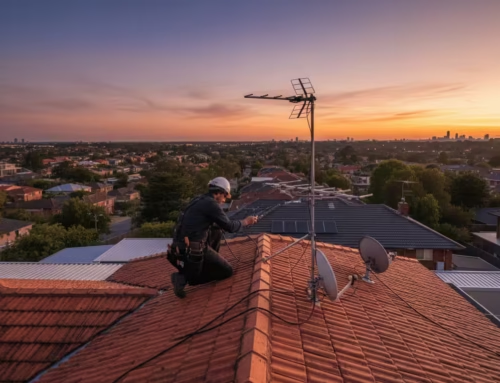
- 1 Initial Assessment and Safety SetupThe licensed cabler inspects roof access requirements, establishes fall protection systems as required under the Work Health and Safety Regulation 2017 (NSW), and confirms the optimal mounting location based on line-of-sight to Sydney transmitters.
- 2 Removal of Existing AntennaThe old antenna is carefully disconnected from coaxial cable, removed from mounting hardware, and safely lowered from the roof. Mounting hardware is inspected to determine whether it can be reused or requires replacement.
- 3 New Antenna Installation and OrientationThe replacement antenna is securely mounted using appropriate hardware for your roof type, oriented precisely toward Sydney transmitters using compass bearings and signal strength measurements, and properly grounded as required by ACMA technical standards.
- 4 Connection and Signal TestingFresh F-type connectors are installed on coaxial cable, connections are weatherproofed, and comprehensive signal testing verifies adequate signal strength (typically -50 to -60 dBm) and MER values (above 30 dB) across all broadcast channels.
- 5 Final Verification and DocumentationThe cabler performs channel scanning on your television, verifies reception quality on all available channels, provides warranty documentation, and explains any maintenance recommendations to extend your new antenna’s service life.
Under the Work Health and Safety Act 2011 (NSW), licensed cablers must use appropriate fall protection equipment and follow safe work procedures when accessing roofs. Sydney Cabling maintains comprehensive insurance coverage and follows all safety protocols across our 15+ years of operation and over 40,000 completed installations.
How to Extend Your Antenna’s Lifespan After Installation
Proper maintenance significantly extends antenna service life and reduces the likelihood of premature replacement. Understanding the benefits of regular TV antenna maintenance helps homeowners develop appropriate care routines.
Annual visual inspections from ground level using binoculars allow early detection of developing issues before they require major repairs. Look for loose mounting hardware, signs of corrosion on elements or connections, physical damage from branches or debris, and proper antenna orientation. Any concerns identified during these inspections should prompt professional assessment by an ACMA-registered cabler.
Trimming nearby tree branches prevents physical damage during storms and reduces the accumulation of leaf litter that can trap moisture against antenna elements and mounting hardware. Maintaining clear line-of-sight to Sydney transmitters also optimises signal reception and reduces the stress on antenna systems from marginal signal conditions.
Professional maintenance inspections every 3-5 years allow licensed cablers to identify and address minor issues before they develop into major problems requiring replacement. These inspections typically include tightening mounting hardware, replacing weatherproofing on connections, verifying signal strength and quality, and assessing overall antenna condition.
Sydney Cabling has completed over 40,000 antenna installations and repairs across Greater Sydney in 15+ years of operation. Our ACMA-registered cablers provide honest assessments of whether repair or replacement is the right choice for your situation, backed by up to 20 years warranty on certain parts and labour. Contact us today for a no-obligation inspection and quote.
ACMA licensed. 15+ years experience. Over 40,000 completed jobs across Greater Sydney. Up to 20-year warranty on parts and labour.
Frequently Asked Questions About Antenna Repair vs Replacement
How long should a TV antenna last in Sydney?
A quality TV antenna installed by a licensed cabler typically lasts 10-15 years in Sydney’s coastal climate, though exposure to salt air in beachside suburbs like Coogee or Manly may reduce lifespan to 8-12 years. According to the Australian Communications and Media Authority (ACMA), proper installation under the ACMA Cabling Provider Rules 2014 significantly extends antenna longevity. Regular maintenance can add 3-5 years to your antenna’s operational life.
Is it cheaper to repair or replace a TV antenna in Sydney?
Minor repairs like replacing corroded connections or tightening mounting brackets typically cost $150-$300, while full antenna replacement ranges from $300-$800 depending on antenna type and roof access. If your antenna is over 10 years old, has visible corrosion, or requires multiple repairs, replacement is usually more cost-effective. Under the Telecommunications Act 1997 (Cth), all antenna work must be performed by ACMA-registered cablers to ensure compliance and safety.
Can I repair my own TV antenna or do I need a licensed cabler?
Under the ACMA Cabling Provider Rules 2014, any work involving coaxial cable connections, antenna mounting, or signal distribution systems must be performed by a licensed cabler holding Open Cabler Registration. Homeowners can safely check for obvious obstructions or loose cables, but climbing on roofs and working with antenna systems requires compliance with the Work Health and Safety Act 2011 (NSW) and proper licensing. Sydney Cabling holds full ACMA registration for all antenna work.
What are the signs my antenna needs replacing instead of repairing?
Replace your antenna if you notice severe rust or corrosion on elements, physical damage like bent or broken dipoles, persistent pixelation across multiple channels despite repairs, or if your antenna is over 12 years old and showing signal degradation. According to NSW Fair Trading guidelines, if repair costs exceed 60% of replacement cost, replacement is the better investment. Modern high-gain antennas also provide superior reception of digital signals from Sydney transmitters at Artarmon and Gore Hill.
Will a new antenna improve my TV reception in Sydney?
Yes, modern digital TV antennas offer significantly better signal reception than older analogue-era models, with typical gain improvements of 3-6 dBi for UHF signals. Newer antennas feature optimised element spacing for DVB-T digital frequencies (channels 6-12 and 28-51 in Sydney) and better rejection of 4G/5G mobile interference. According to the Australian Communications and Media Authority (ACMA), properly oriented high-gain antennas can receive signals up to 80km from Sydney’s main transmitters, covering all Greater Sydney suburbs.
How long does professional antenna replacement take?
Professional antenna replacement by a licensed cabler typically takes 2-4 hours, including safe roof access, removal of the old antenna, installation of the new antenna with proper mounting and grounding, signal testing across all channels, and connection verification. Under the Work Health and Safety Regulation 2017 (NSW), licensed cablers must use appropriate fall protection equipment and follow safe work procedures. Sydney Cabling provides up to 20 years warranty on certain parts and labour for replacement installations.