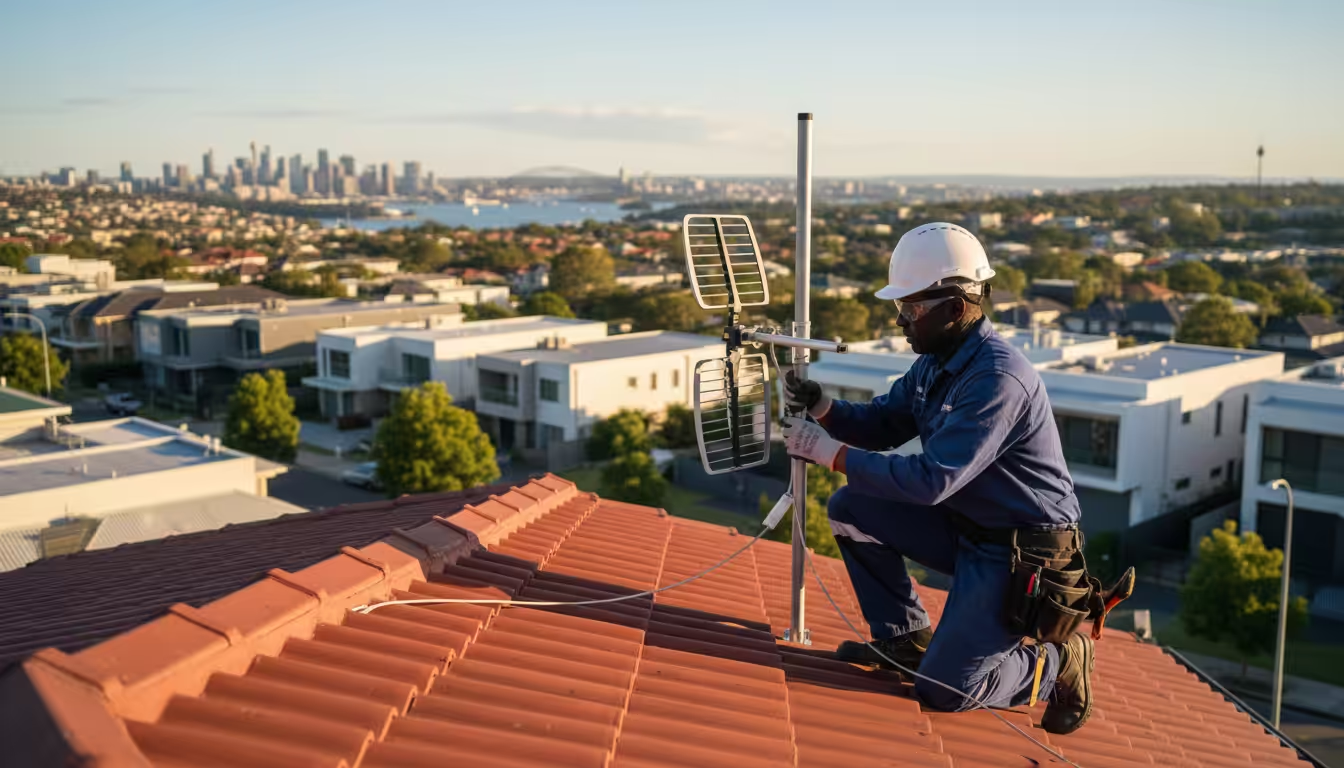
Professional antenna installation Sydney services ensure reliable free-to-air television reception while meeting strict legal compliance requirements under Australian telecommunications law. According to the Australian Communications and Media Authority (ACMA), over 13.5 million Australians access free-to-air television services, with digital TV antenna reception remaining the primary method for metropolitan viewers despite streaming growth. Whether you’re installing a new antenna system or upgrading existing equipment, understanding the technical requirements, legal obligations, and installation process helps you make informed decisions about how antennas work and their role in TV reception for your Sydney property.
This comprehensive guide explains what Sydney homeowners and property managers need to know about professional antenna installation, from ACMA licensing requirements and technical specifications to costs, installation processes, and selecting the right equipment for your location.
Why Professional Antenna Installation Matters in Sydney
Professional antenna installation delivers three critical outcomes that DIY approaches cannot guarantee: legal compliance, safety, and optimal signal performance. Under the Telecommunications Act 1997 (Cth) and Australian Communications and Media Authority (ACMA) Cabling Provider Rules 2014, all antenna installations connecting to customer equipment must be performed by ACMA-registered cablers holding Open Cabler Registration. This legal requirement exists because improper installations can cause signal interference affecting neighbouring properties, create electrical hazards, and result in poor reception requiring costly remediation.
The Work Health and Safety Act 2011 (NSW) and Work Health and Safety Regulation 2017 (NSW) impose strict safety obligations for roof work, including fall prevention systems, appropriate safety equipment, and training requirements that most homeowners cannot meet. NSW Fair Trading reports that unlicensed cabling work accounts for over 2,400 consumer complaints annually in NSW, with improper antenna installations causing signal interference, property damage, and safety hazards including roof falls and electrical faults.
By the Numbers
- STATCommunications Alliance data shows that professionally installed antenna systems achieve 95-98% signal reliability in metropolitan Sydney when correctly oriented toward transmitter sites at Artarmon and Gore Hill, compared to 60-75% reliability for DIY installations.
- STATThe Australian Bureau of Statistics (ABS) 2021 Census data indicates that 87% of Sydney households maintain TV antenna connections for free-to-air reception, with antenna installation requests increasing 23% since 2020 as households seek alternatives to subscription streaming costs.
Sydney Cabling has completed over 40,000 antenna installations across Greater Sydney with 15+ years experience, holding full ACMA Open Cabler Registration and providing up to 20 years warranty on certain parts and labour. Our licensed technicians ensure every installation meets telecommunications regulations, achieves optimal signal strength, and complies with NSW safety requirements.
Understanding TV Antenna Types: UHF, VHF, and Digital Standards
Sydney’s digital television broadcasts operate primarily on UHF (Ultra High Frequency) spectrum between 470-694 MHz, corresponding to channels 28-51. The main transmitter sites serving Greater Sydney include Artarmon (serving inner western and northern suburbs), Gore Hill (serving eastern suburbs and North Shore), and Balgowlah Heights (serving northern beaches and Manly areas). Understanding which transmitter serves your location determines the optimal antenna type and orientation for maximum signal strength.
UHF antennas designed for digital reception typically provide 10-15 dBi gain, meaning they amplify received signals by this amount compared to a theoretical isotropic antenna. Higher gain antennas with narrow beam patterns work best in areas with clear line-of-sight to transmitters, while medium-gain antennas with wider reception patterns suit locations with signal reflections from buildings or terrain. VHF antennas operating on 174-230 MHz are rarely required in metropolitan Sydney, though some regional areas still use VHF frequencies for certain channels.
Digital television signals require adequate signal strength (typically -65 dBm or stronger) and good signal quality measured by Modulation Error Ratio (MER) and signal-to-noise ratio. Professional installers use spectrum analysers to measure these parameters during installation, ensuring your system delivers reliable reception across all available channels. For detailed guidance on equipment selection, refer to our guide on choosing the right antenna type for your Sydney location.
ACMA Licensing Requirements for Antenna Installation in NSW
The Australian Communications and Media Authority (ACMA) Cabling Provider Rules 2014 establish strict licensing requirements for anyone performing cabling work, including TV antenna installations. Only individuals holding ACMA Open Cabler Registration can legally install, maintain, or connect telecommunications cabling including coaxial cable runs from antennas to wall plates and customer equipment. This registration requires completion of accredited training, demonstrated technical competency, and ongoing compliance with industry standards.
Important:
Licensed cablers must comply with AS/CA S009 Installation Requirements for Customer Cabling, which specifies technical standards for cable types, connector installations, earthing requirements, and signal distribution systems. These standards ensure installations deliver reliable performance, prevent signal interference, and maintain electrical safety. Insurance companies may void home insurance coverage if property damage or injury results from unlicensed cabling work, creating significant financial liability for property owners who attempt DIY installations or hire unlicensed contractors.
Sydney Cabling maintains full ACMA Open Cabler Registration and carries comprehensive public liability insurance covering all installation work. Our technicians complete ongoing professional development to stay current with regulatory changes and technical advances in antenna and signal distribution technology.
What Does Antenna Installation Cost in Sydney?
Professional antenna installation costs in Sydney typically range from $250 to $800 depending on several factors: antenna type and quality, roof access difficulty, number of TV outlets requiring connection, coaxial cable run lengths, and whether signal distribution equipment such as amplifiers or splitters are needed. Single-storey homes with straightforward roof access and one or two outlet connections represent the lower end of this range, while multi-storey properties, difficult roof access, or installations requiring masthead amplifiers and multiple outlet distribution cost more due to additional labour and equipment requirements.
Standard installations include the antenna, mounting hardware (J-mount, tilt mount, or mast clamp), RG6 quad-shield coaxial cable, F-type connectors, wall plates, and labour for roof mounting, cable runs, and signal testing. Properties requiring distribution amplifiers to maintain signal strength across multiple outlets or long cable runs exceeding 20 metres incur additional costs of $150-$300 for equipment and installation. Commercial installations and multi-dwelling unit properties requiring signal distribution to numerous outlets involve custom design and significantly higher costs based on building size and outlet requirements.
For comprehensive pricing information including factors affecting costs and potential savings, review our detailed breakdown of antenna installation costs in Sydney. Reputable installers provide written quotes specifying all equipment, labour, and warranty terms before commencing work, ensuring transparency and compliance with Australian Consumer Law requirements.
The Professional Installation Process: What to Expect
Professional antenna installation follows a systematic process ensuring optimal signal reception, safety compliance, and long-term reliability. Understanding each stage helps property owners prepare for installation day and recognize quality workmanship. Standard residential installations typically take 2-4 hours from arrival to completion, though complex installations requiring masthead amplifiers, multiple outlet distribution, or difficult roof access may extend to 4-6 hours.
- 1 Site Assessment and Transmitter IdentificationTechnicians identify which transmitter serves your location (Artarmon, Gore Hill, or Balgowlah Heights) and assess roof access, mounting locations, and optimal antenna orientation using signal strength meters and compass bearings.
- 2 Antenna Mounting and OrientationThe antenna is securely mounted using appropriate hardware (J-mount for fascia installation, tilt mount for roof pitch adjustment, or mast clamp for existing poles) and precisely oriented toward the transmitter for maximum signal strength, typically achieving -50 to -65 dBm at the antenna.
- 3 Coaxial Cable InstallationRG6 quad-shield coaxial cable is run from the antenna through roof space or external conduit to outlet locations, maintaining minimum bend radius requirements and avoiding parallel runs with electrical cabling to prevent interference. Cable runs exceeding 20 metres or serving multiple outlets may require a distribution amplifier to maintain signal strength above -65 dBm at each outlet.
- 4 Outlet Installation and ConnectionWall plates with F-type connectors are installed at each outlet location, with cables terminated using compression connectors that provide superior connection quality compared to crimp or screw-on types. Splitters or diplexers are installed where required to distribute signal to multiple outlets while maintaining adequate signal levels.
- 5 Signal Testing and Channel ScanningTechnicians test signal strength and quality at each outlet using spectrum analysers, verifying adequate signal levels (typically -50 to -65 dBm), good MER values (above 25 dB), and successful reception of all available channels. Digital tuners are connected and channel scans performed to confirm all Sydney free-to-air channels are received clearly.
For detailed technical explanation of each installation stage, refer to our step-by-step digital TV antenna installation process guide. Professional installers provide documentation including warranty information, ACMA compliance certificates, and technical specifications for installed equipment.
Selecting the Right Antenna for Your Property and Location
Antenna selection depends on your distance from transmitters, terrain and building obstructions, and the number of TV outlets requiring connection. Properties within 10 kilometres of major transmitters (Artarmon or Gore Hill) with clear line-of-sight typically achieve excellent results with medium-gain UHF antennas rated 8-11 dBi. These antennas provide adequate signal strength while offering wider reception patterns that handle signal reflections from buildings and terrain features common in urban environments.
Properties 10-30 kilometres from transmitters or locations with partial obstructions benefit from high-gain UHF antennas rated 12-15 dBi, which concentrate reception in a narrower beam pattern for maximum signal capture. Fringe areas beyond 30 kilometres or locations with significant terrain blocking may require masthead amplifiers (also called preamplifiers) installed at the antenna to boost weak signals before cable losses occur. Masthead amplifiers typically provide 15-20 dB gain and require power insertion at an indoor location via the coaxial cable.
Multi-dwelling properties including apartments, townhouses, and commercial buildings often use shared antenna systems with distribution amplifiers feeding multiple outlets across the building. These systems require careful design to maintain adequate signal levels at all outlets while preventing overload at outlets closest to the amplifier. Professional installers calculate signal budgets accounting for cable losses (approximately 3-5 dB per 10 metres for RG6 cable), splitter losses (3.5-7 dB depending on number of outputs), and required signal levels at each outlet.
Residential vs Commercial Installation Requirements
Residential antenna installations typically serve 1-6 TV outlets within a single dwelling, using straightforward signal distribution via splitters or small distribution amplifiers. Standard residential systems cost $250-$800 depending on complexity, with installations completed in 2-4 hours. Residential installations focus on reliable reception for household viewing, with antenna mounting on roof ridges, fascia boards, or external walls providing adequate elevation and clear signal paths to transmitters.
Commercial antenna installations serve businesses, hospitality venues, healthcare facilities, and multi-dwelling residential buildings requiring signal distribution to numerous outlets. These installations involve custom system design, higher-capacity distribution amplifiers, and structured cabling approaches meeting commercial building standards. Commercial systems may incorporate multiple antennas for signal diversity, professional-grade distribution amplifiers with adjustable gain and slope controls, and monitoring systems alerting facility managers to signal issues. For businesses requiring professional installation services, review our guide on commercial antenna installation requirements.
Strata properties present unique challenges requiring coordination with strata committees, compliance with building by-laws, and consideration of aesthetics and shared infrastructure. Professional installers experienced with strata properties understand approval processes, preferred mounting locations, and documentation requirements for body corporate records.
Common Installation Challenges in Sydney Suburbs
Sydney’s varied terrain, building density, and transmitter locations create location-specific reception challenges requiring experienced assessment and solution design. Inner-city suburbs including Coogee, Vaucluse, and Maroubra often experience multi-path interference where signals reflect off tall buildings, causing ghosting or pixelation. Medium-gain antennas with moderate beam width and careful orientation minimize multi-path issues while maintaining adequate signal strength.
Northern suburbs including St Ives, Lindfield, Killara, and Forestville benefit from proximity to Artarmon and Gore Hill transmitters but may face terrain blocking from ridges and valleys. Properties in valley locations or on south-facing slopes sometimes require higher antenna mounting or masthead amplifiers to achieve reliable reception. Northern beaches suburbs including Manly, Brookvale, and Bayview primarily receive signals from Balgowlah Heights transmitter, with coastal locations sometimes experiencing salt corrosion requiring marine-grade mounting hardware and regular maintenance.
Western suburbs including Seven Hills, Castle Hill, and Dural face greater distances from transmitters and potential terrain blocking from the Blue Mountains ranges. These locations often require high-gain antennas and careful site assessment to identify optimal mounting locations with clear signal paths. Fred, our lead technician with 15+ years experience across Greater Sydney, has solved reception challenges in virtually every Sydney suburb and understands the specific requirements for reliable reception in each area.
When to Replace vs Repair Your Existing Antenna
Antenna systems typically last 10-15 years before requiring replacement, though harsh weather, salt exposure, and physical damage can shorten service life. Several indicators suggest your antenna needs professional assessment: intermittent signal loss, pixelation or freezing on some channels, complete loss of certain channels while others work normally, visible physical damage to antenna elements, or corroded mounting hardware. For comprehensive guidance on identifying antenna problems, review our article on signs your existing antenna needs repair or replacement.
Repair makes sense when issues stem from corroded connections, damaged coaxial cable, failed amplifiers, or minor physical damage to mounting hardware. These repairs typically cost $150-$350 and restore full system performance. Replacement becomes necessary when antenna elements are broken, corrosion has compromised structural integrity, mounting hardware has failed creating safety hazards, or the antenna type is inappropriate for your location (such as VHF antennas in UHF-only areas).
Properties with older analog-era antennas should consider replacement even if reception seems adequate. Modern digital-optimized UHF antennas provide superior performance, and upgrading coaxial cable from older RG59 to RG6 quad-shield specification significantly improves signal quality and future-proofs your system for potential broadcast changes. Professional assessment identifies whether repair or replacement offers better value and long-term reliability.
- ✓
Verify your installer holds current ACMA Open Cabler Registration by checking the ACMA Cabling Provider Register online before booking - ✓
Identify which Sydney transmitter serves your suburb (Artarmon, Balgowlah Heights, or Gore Hill) to determine optimal antenna orientation - ✓
Count how many TV outlets require connection and note locations to provide accurate scope for quoting - ✓
Check roof access points, safety concerns, and whether existing mounting brackets or masts can be reused - ✓
Confirm whether your property requires a distribution amplifier for multiple outlets or long coaxial cable runs exceeding 20 metres - ✓
Ask about RG6 quad-shield coaxial cable specification to ensure digital signal quality and future-proofing - ✓
Request written warranty terms covering both parts and labour for minimum 5 years, preferably longer - ✓
Verify installer carries public liability insurance and complies with Work Health and Safety Regulation 2017 (NSW) for roof work
Professional antenna installation delivers reliable free-to-air television reception while ensuring legal compliance, safety, and long-term performance. Understanding technical requirements, licensing obligations, and installation processes helps Sydney property owners make informed decisions and select qualified installers who deliver quality results. Regular maintenance extends system life and maintains optimal reception quality. For information on preventative care, review our guide on ongoing antenna maintenance benefits.
Frequently Asked Questions About Antenna Installation Sydney
Do I need a licensed cabler to install a TV antenna in Sydney?
Yes. Under the Australian Communications and Media Authority (ACMA) Cabling Provider Rules 2014, all antenna installations connecting to customer equipment must be performed by an ACMA-registered cabler holding Open Cabler Registration. DIY antenna installation is illegal and may void home insurance. Sydney Cabling holds full ACMA registration for coaxial cabling work.
How much does antenna installation cost in Sydney in 2025?
Professional antenna installation in Sydney typically ranges from $250 to $800 depending on antenna type, roof access difficulty, number of TV outlets, and whether distribution amplifiers or RG6 coaxial cable upgrades are required. Multi-storey buildings and commercial installations requiring signal distribution to multiple units cost more due to additional labour and equipment.
What’s the difference between UHF and VHF antennas for Sydney reception?
Sydney’s digital TV broadcasts from transmitters at Artarmon, Balgowlah Heights, and Gore Hill operate primarily on UHF frequencies (channels 28-51, 470-694 MHz). UHF antennas provide superior digital signal reception in metropolitan Sydney, while VHF antennas (174-230 MHz) are rarely needed. Most modern installations use high-gain UHF antennas rated 10-15 dBi for optimal signal strength.
How long does a professional antenna installation take?
Standard residential antenna installations typically take 2-4 hours including roof mounting, coaxial cable runs, wall plate installation, and signal testing across all channels. Complex installations requiring masthead amplifiers, multiple outlet distribution, or difficult roof access may take 4-6 hours. Commercial installations vary based on building size and outlet requirements.
Can I install an antenna myself to save money?
No. The Telecommunications Act 1997 (Cth) and ACMA Cabling Provider Rules 2014 prohibit unlicensed persons from installing, maintaining, or connecting telecommunications cabling including TV antennas. Additionally, the Work Health and Safety Act 2011 (NSW) requires appropriate safety equipment and training for roof work. Illegal installations risk fines up to $18,780 for individuals under NSW Fair Trading regulations.
What warranty should I expect on antenna installation?
Reputable Sydney antenna installers provide warranties covering both parts and labour. Sydney Cabling offers up to 20 years warranty on certain parts and labour, significantly exceeding industry standards. Warranties should cover antenna hardware, mounting brackets, coaxial cabling, and workmanship defects. Always verify warranty terms comply with Australian Consumer Law protections.
Sydney Cabling has completed over 40,000 antenna installations across Greater Sydney with 15+ years experience and holds full ACMA Open Cabler Registration. We provide up to 20 years warranty on certain parts and labour and guarantee compliant, safe installations meeting all NSW regulations. Contact Sydney Cabling today for a free quote and expert advice on your antenna installation needs.
ACMA licensed. 15+ years experience. Over 40,000 completed jobs across Greater Sydney. Up to 20-year warranty on parts and labour.