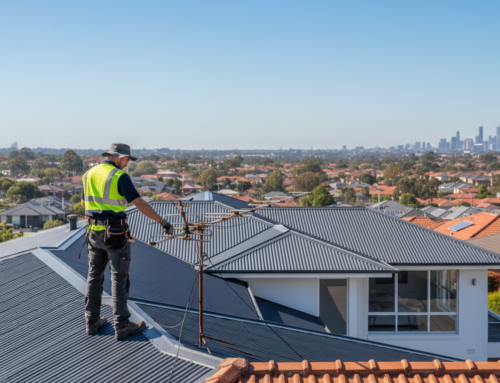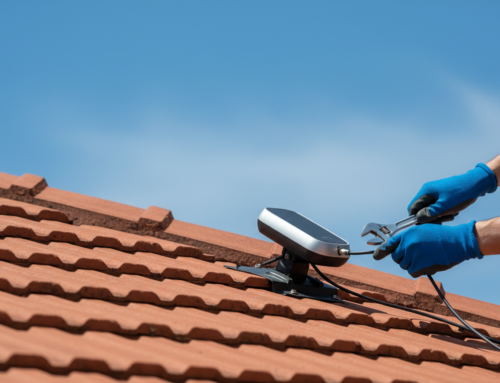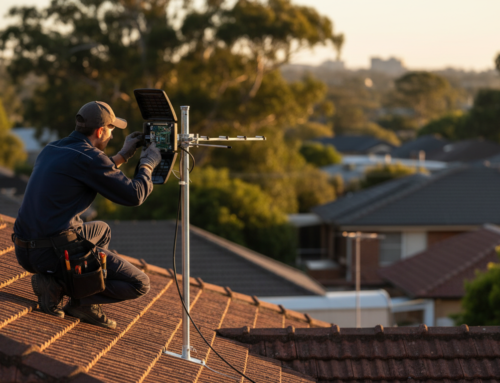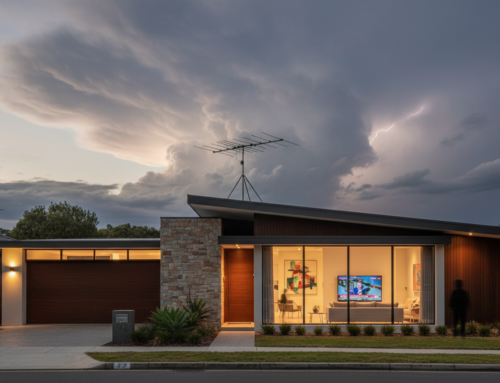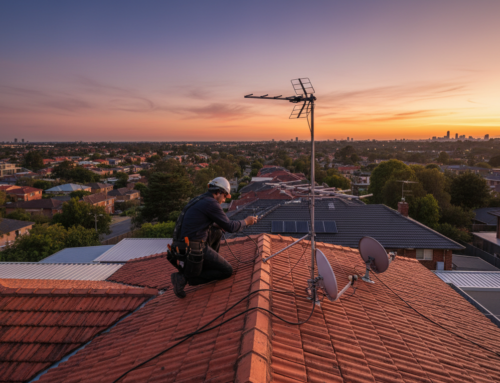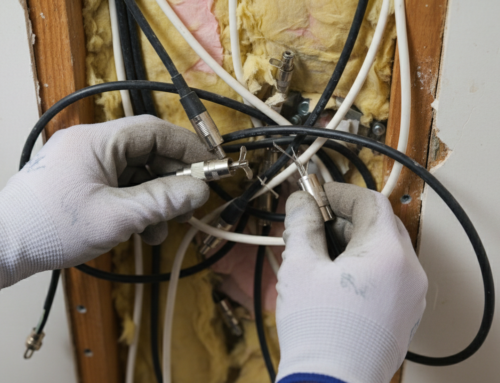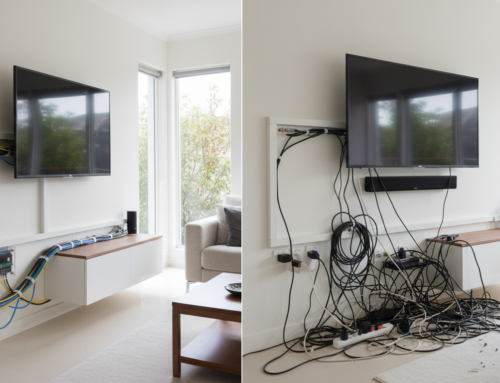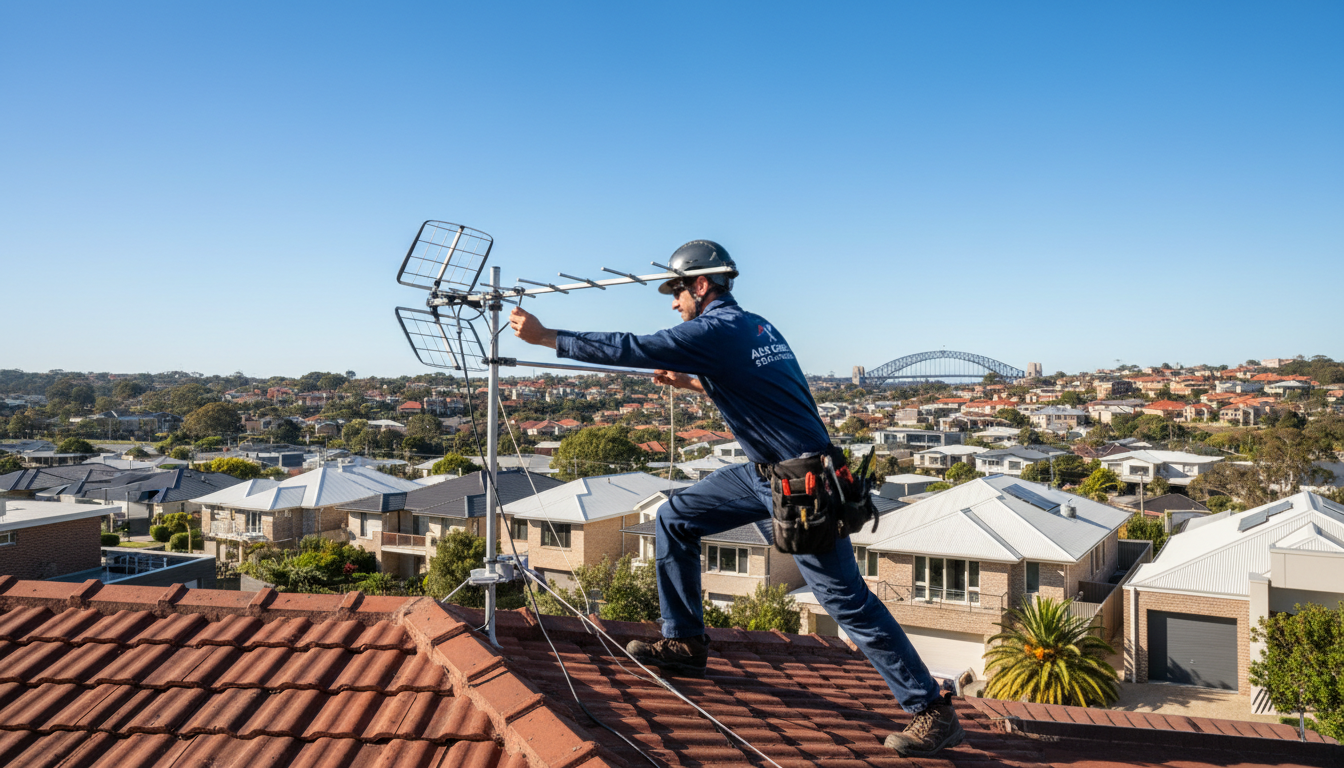
When your free-to-air television reception fails, you need TV antenna repairs Sydney homeowners can trust. Whether you’re experiencing pixelation, complete signal loss, or intermittent dropouts across your home, professional diagnosis and repair by an ACMA-registered cabler restores reliable reception quickly and safely. Sydney Cabling has completed over 40,000 antenna and cabling jobs across Greater Sydney over 15+ years, providing same-day repairs with up to 20 years warranty on certain parts and labour.
This guide explains the most common antenna faults affecting Sydney homes, how licensed cablers diagnose signal problems using technical measurements, and what homeowners can safely check before calling for professional antenna repairs Sydney residents rely on for crystal-clear digital TV.
By the Numbers
- STATAccording to the Australian Communications and Media Authority (ACMA), over 4.2 million Australian households rely on free-to-air digital television as their primary or secondary viewing source as of 2023.
- STATCommunications Alliance data shows that coaxial cable degradation accounts for approximately 40% of all residential TV reception complaints in coastal areas like Sydney, primarily due to salt air corrosion and UV damage.
- STATThe Australian Bureau of Statistics (ABS) reports that 68% of Sydney households receive free-to-air television, with the Northern Beaches, Eastern Suburbs, and Hills District showing the highest antenna installation density.
- STATNSW Fair Trading records indicate that unlicensed cabling work results in over 300 consumer complaints annually in NSW, with antenna and coaxial installations among the most common non-compliant services.
Common TV Antenna Faults Across Sydney Homes
Television reception problems in Sydney typically stem from five primary fault categories: physical antenna damage, corroded connections, degraded coaxial cable, faulty distribution components (splitters and amplifiers), and environmental interference. Understanding these common faults helps homeowners recognise 5 signs your TV antenna needs repair before minor issues escalate into complete signal loss.
Physical antenna damage includes bent or broken elements, loose mast clamps, corroded J-mounts, and misaligned antenna orientation. Sydney’s coastal winds—particularly in suburbs like Manly, Coogee, and Vaucluse—frequently shift antenna alignment away from primary transmitter sites at Artarmon, Gore Hill, and Balgowlah Heights. Even a 10-degree rotation can reduce signal strength by 6-12 dB, pushing reception below the minimum threshold for reliable digital TV.
Corroded F-type connectors represent another frequent fault, especially in coastal and high-humidity areas. Salt air penetrates poorly sealed connections, creating oxidation that increases resistance and degrades signal quality. Fred, our lead technician with 15+ years experience, reports that connector corrosion accounts for approximately 25% of all antenna repair callouts across the Northern Beaches and Eastern Suburbs.
Storm Damage and Weather-Related Antenna Repairs
Severe weather events cause immediate and cumulative antenna damage across Greater Sydney. Strong winds bend antenna elements, loosen mast hardware, and shift alignment. Lightning strikes—while rarely hitting antennas directly—create electromagnetic pulses that damage distribution amplifiers and digital tuners. Heavy rain exposes inadequate weatherproofing, allowing water ingress into coaxial connections and wall plates.
Understanding how weather affects your antenna helps property managers and homeowners distinguish between temporary atmospheric interference and permanent physical damage requiring repair. Atmospheric ducting during hot, humid conditions can temporarily improve or degrade signals, while sustained pixelation after storms typically indicates physical damage.
Hailstorms pose particular risk to older antenna installations where UV-degraded plastic components become brittle. Mast clamps, tilt mounts, and cable clips fracture under hail impact, allowing antennas to shift or fall. Sydney Cabling provides emergency repair services across all Greater Sydney suburbs including Castle Hill, Dural, Seven Hills, and Bayview, typically responding same-day to storm damage callouts.
Diagnosing Signal Strength Issues: dBm, dBi, and Antenna Gain
Professional antenna diagnosis relies on precise signal measurement using calibrated field strength meters. Signal strength is measured in dBm (decibels relative to one milliwatt), with digital television requiring minimum signal levels between -65 dBm and -30 dBm for reliable reception. Signals below -65 dBm cause pixelation and dropouts, while signals above -30 dBm can overload tuners, also causing reception problems.
Antenna gain, measured in dBi (decibels relative to an isotropic radiator), indicates how effectively an antenna focuses received signals. High-gain UHF antennas (10-15 dBi) suit distant or weak signal areas in Sydney’s outer suburbs like Dural and St Ives, while medium-gain antennas (6-9 dBi) work better in strong signal areas closer to transmitters. Our comprehensive guide to troubleshooting weak TV signals explains how gain, directivity, and signal path loss interact to determine reception quality.
Signal-to-noise ratio and Modulation Error Ratio (MER) provide additional diagnostic information. MER values above 25 dB indicate excellent signal quality, while values below 20 dB suggest interference, multipath reflections, or amplifier noise degrading the digital signal. ACMA-registered cablers use spectrum analysers to measure these parameters, identifying whether problems originate from the antenna, cabling, distribution system, or external interference sources.
Coaxial Cable Faults: RG6 vs RG11 Degradation and Water Ingress
Coaxial cable degradation represents the single most common cause of gradual reception deterioration in Sydney homes. RG6 coaxial cable—the standard for residential antenna installations—features 75-ohm impedance, copper-clad steel centre conductor, foam dielectric insulation, and aluminium foil plus braided shield. UV exposure, moisture penetration, and physical stress degrade these components over 10-15 years.
Water ingress occurs when cable jackets crack, F-type connectors lack weatherproofing boots, or wall penetrations remain unsealed. Water migrates along the cable through capillary action, corroding the centre conductor and shield. This increases signal attenuation (loss) from the typical 3-5 dB per 30 metres to 10-15 dB or more, pushing signal strength below usable thresholds.
RG11 cable offers lower attenuation due to its larger diameter (10.3mm vs 6.9mm for RG6) and thicker centre conductor. This makes RG11 ideal for long cable runs in larger properties or installations in weak signal areas like Forestville, Lindfield, and Killara where every decibel matters. However, RG11’s rigidity makes it harder to route through roof cavities and wall cavities, increasing installation complexity.
Splitter and Amplifier Failures in Multi-TV Installations
Multi-television installations require signal distribution components that introduce additional points of failure. Passive splitters divide the antenna signal between multiple outputs, with each split reducing signal strength. A two-way splitter causes approximately 3.5 dB loss per output, a four-way splitter causes 7 dB loss, and an eight-way splitter causes 11 dB loss plus cable attenuation.
When incoming signal strength sits near the minimum threshold, splitter loss pushes one or more outputs below usable levels. Homeowners often report that some TVs work perfectly while others pixelate or show no signal—a classic symptom of inadequate signal budget in the distribution system. Corroded splitter connections, water-damaged splitter housings, and failed internal components all require replacement by an ACMA-registered cabler.
Distribution amplifiers boost signal strength to compensate for splitter loss and long cable runs. However, amplifiers introduce their own failure modes: power supply failure, component degradation, overload from excessive input signal, and noise amplification when placed incorrectly in the signal chain. Quality distribution amplifiers include automatic gain control and built-in filtering to prevent overload and interference, but these features degrade over 8-12 years of continuous operation.
What Homeowners Can Safely Check vs Licensed Cabler Work
Homeowners can perform basic visual inspections and TV settings checks without breaching the Australian Communications and Media Authority (ACMA) Cabling Provider Rules 2014. However, any physical work on antennas, masts, coaxial cabling, or connections must be performed by a registered cabler holding Open Cabler Registration under the Telecommunications Act 1997 (Cth).
- ✓
Check all TV sets in your home to determine if the problem affects one TV (likely internal TV tuner or local cable fault) or all TVs (antenna or main feed issue) - ✓
Inspect visible coaxial cable runs for physical damage, kinks, water pooling near connections, or corrosion on F-type connectors - ✓
Perform a manual channel scan on your TV (Settings > Channels > Auto-tune) to rule out software or tuning issues before calling a technician - ✓
Note specific symptoms: pixelation on certain channels only, complete signal loss, intermittent dropouts during weather, or gradual degradation over weeks - ✓
Check if neighbours experience similar reception problems, indicating a transmitter issue rather than your antenna system - ✓
Document when the problem started and any recent events: storms, roof work, new nearby construction, or tree growth blocking line-of-sight to transmitters - ✓
Verify your antenna system age and last service date—antennas over 10-15 years old in Sydney’s coastal environment often require replacement due to corrosion - ✓
Confirm your building’s strata rules if in an apartment, as antenna repairs may require body corporate approval or use of common property access
Important:
Our detailed simple antenna repairs guide clarifies exactly what homeowners can safely inspect versus work requiring professional service, helping you understand when to call an ACMA-registered cabler.
How Sydney Cabling Diagnoses and Repairs Antenna Faults
Professional antenna diagnosis follows a systematic methodology that identifies faults quickly and accurately. Sydney Cabling’s ACMA-registered technicians use calibrated test equipment and structured troubleshooting procedures refined over 40,000 completed jobs across Greater Sydney.
- 1Initial Signal Measurement at TV OutletsUsing a calibrated field strength meter, technicians measure signal level (dBm), signal quality (MER), and signal-to-noise ratio at each TV outlet to establish baseline performance and identify which parts of the distribution system show degraded signals.
- 2Roof-Level Antenna and Mast InspectionPhysical inspection identifies bent elements, corroded hardware, loose mast clamps, and misalignment. Technicians verify antenna orientation toward appropriate transmitter sites (Artarmon for most Sydney suburbs, Balgowlah Heights for Northern Beaches, Gore Hill for North Shore areas) and check for obstructions like tree growth or new buildings blocking line-of-sight.
- 3Coaxial Cable and Connection TestingCable continuity testing, insulation resistance measurement, and visual inspection of F-type connectors identify water damage, corrosion, and physical cable faults. Time-domain reflectometry (TDR) locates cable breaks or impedance mismatches in long or concealed cable runs.
- 4Distribution System AnalysisTechnicians measure signal levels before and after splitters, test amplifier gain and noise figure, and verify correct impedance matching throughout the distribution system. This identifies whether problems originate from inadequate signal budget, faulty components, or incorrect system design.
- 5Repair Implementation and VerificationAfter identifying faults, technicians perform repairs—replacing corroded connectors, realigning antennas, installing new RG6 cable sections, or replacing failed splitters and amplifiers. Final signal measurements at all TV outlets verify that repairs restore signal strength and quality to specification, with documentation provided for warranty purposes.
This systematic approach to TV reception repairs in Sydney ensures accurate diagnosis and effective repairs that address root causes rather than symptoms, preventing recurring problems.
Repair vs Replace: Cost Considerations for Sydney Homeowners
Deciding between antenna repair and complete replacement depends on the extent of damage, system age, and long-term cost effectiveness. Minor repairs—connector replacement, realignment, or single cable section replacement—typically cost $150-$250 and extend system life by 3-5 years. Major repairs involving mast replacement, extensive cable runs, or distribution system upgrades cost $300-$600 and may approach the cost of complete antenna replacement.
Antennas over 15 years old in Sydney’s coastal suburbs often show multiple degradation points: corroded elements, brittle mounting hardware, UV-damaged cable, and failed connections. In these cases, complete antenna replacement provides better value than sequential repairs. New antenna installations include modern high-gain UHF antennas, quad-shield RG6 coaxial cable, weatherproof F-type connectors, and corrosion-resistant stainless steel mounting hardware—all backed by Sydney Cabling’s up to 20 years warranty on certain parts and labour.
Our guide to average TV aerial installation costs in Sydney provides detailed pricing information to help homeowners make informed decisions about repair versus replacement based on their specific situation and budget.
Preventative Maintenance vs Emergency Repairs
Scheduled preventative maintenance costs significantly less than emergency repairs and prevents reception problems before they occur. Annual or biennial antenna inspections identify developing problems—loose hardware, early-stage corrosion, degrading cable jackets, and vegetation growth—when repairs remain simple and inexpensive.
The benefits of regular TV antenna maintenance include extended system lifespan, consistent reception quality, and reduced likelihood of complete signal failure during major sporting events or severe weather when emergency service demand peaks. Property managers overseeing multiple units or buildings particularly benefit from scheduled maintenance programs that prevent tenant complaints and emergency callout fees.
Emergency repairs typically cost 50-100% more than scheduled service due to urgent response requirements, after-hours callout fees, and the higher likelihood of extensive damage requiring major component replacement. Sydney Cabling offers maintenance plans for residential and strata properties across Brookvale, Maroubra, and all Greater Sydney suburbs, providing scheduled inspections and priority emergency service when needed.
Get fast, reliable TV antenna repairs from Sydney Cabling’s ACMA-registered cablers. With over 40,000 completed jobs across Greater Sydney and up to 20 years warranty on certain parts and labour, we’ll restore your free-to-air TV reception quickly and professionally. Contact us today for same-day service.
ACMA licensed. 15+ years experience. Over 40,000 completed jobs across Greater Sydney. Up to 20-year warranty on parts and labour.
Frequently Asked Questions About TV Antenna Repairs in Sydney
Do I need a licensed cabler to repair my TV antenna in Sydney?
Yes. Under the Australian Communications and Media Authority (ACMA) Cabling Provider Rules 2014, all work on coaxial cabling systems including antenna repairs must be performed by a registered cabler holding Open Cabler Registration. Sydney Cabling holds full ACMA registration for structured, coaxial, and optical fibre cabling work across Greater Sydney.
How much does TV antenna repair cost in Sydney?
Typical antenna repairs in Sydney range from $150 for minor adjustments or connector replacements to $400+ for mast repairs, amplifier replacement, or extensive coaxial cable runs. According to NSW Fair Trading, licensed cablers must provide written quotes for work exceeding $1,000. Sydney Cabling offers transparent pricing and up to 20 years warranty on certain parts and labour.
What causes pixelation and dropouts on digital TV in Sydney?
Pixelation occurs when signal strength falls below the minimum threshold (typically -65 dBm for reliable UHF reception). Common causes include corroded connections, water-damaged RG6 coaxial cable, faulty splitters reducing signal by 3.5 dB per output, or physical antenna misalignment from Sydney’s coastal winds. Australian Communications and Media Authority (ACMA) data shows weather and ageing infrastructure are the leading causes of reception faults.
Can I repair my own TV antenna or do I need a professional?
Homeowners can safely inspect for visible damage and check TV settings, but any physical work on the antenna, mast, cabling, or connections must be performed by an ACMA-registered cabler under the Telecommunications Act 1997 (Cth). DIY repairs also void equipment warranties and may breach strata bylaws or insurance conditions in Sydney apartment buildings.
How long does a TV antenna repair take in Sydney?
Most standard repairs—connector replacement, realignment, or splitter replacement—take 1-2 hours on-site. Complex repairs involving mast replacement, new cable runs through roof cavities, or distribution amplifier installation may require 3-4 hours. Sydney Cabling provides same-day or next-day service across all Greater Sydney suburbs including Coogee, Castle Hill, Manly, and Dural.
Will my TV antenna work after the 2024 frequency changes?
Australian Communications and Media Authority (ACMA) completed the digital dividend restack in 2021, moving all Sydney free-to-air channels to the UHF band (channels 28-51). If your antenna was installed before 2013 and is VHF-only, it requires replacement. Modern UHF antennas installed by Sydney Cabling are compatible with all current Sydney transmissions from Artarmon, Balgowlah Heights, and Gore Hill towers.