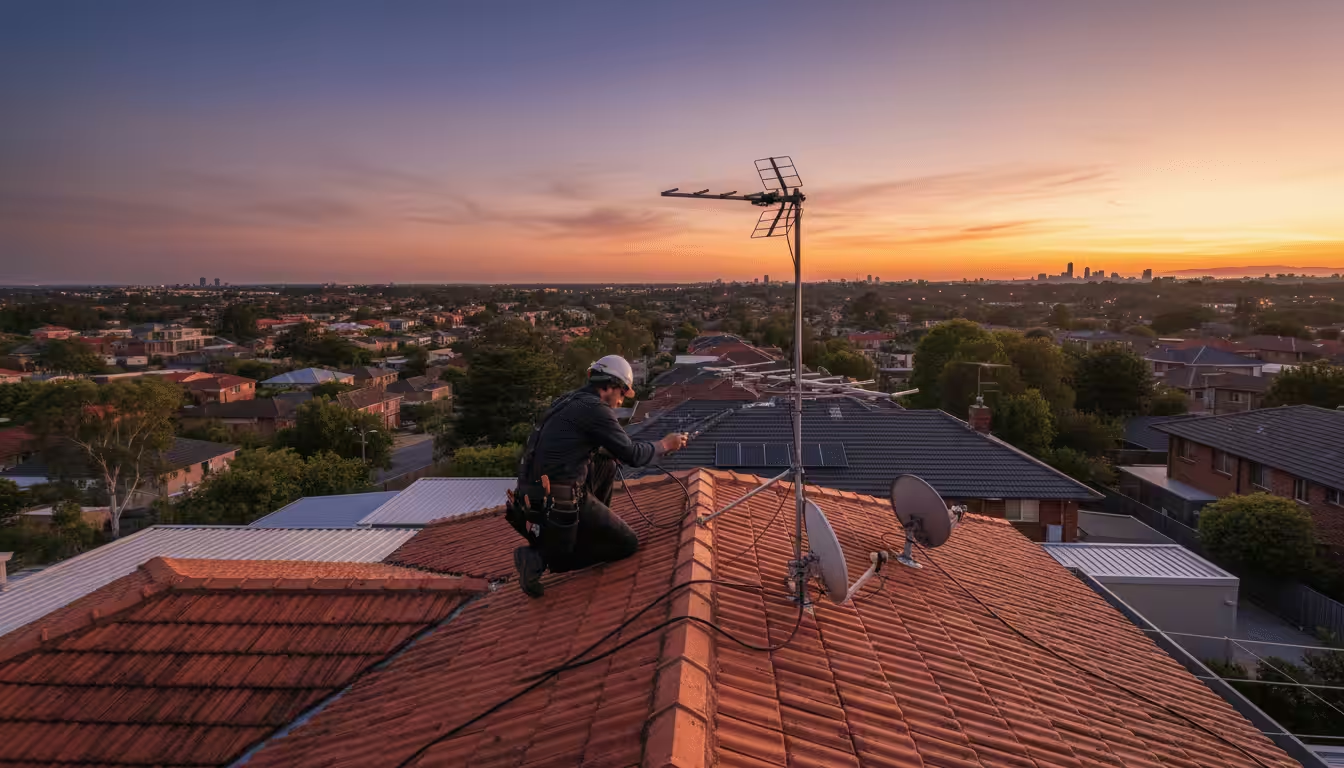
When researching television options for your Sydney home, the antenna vs cable vs satellite decision often comes down to one critical factor: reliability. Which technology delivers consistent picture quality regardless of weather conditions, infrastructure issues, or network outages? As an ACMA-licensed cabler with over 15 years installing and maintaining all three systems across Greater Sydney, I’ve seen firsthand how each technology performs under real-world conditions in suburbs from Coogee to Castle Hill.
According to the Australian Communications and Media Authority (ACMA), over 13 million Australians access free-to-air television services, representing the most widely used television platform in Australia. This preference reflects not just cost considerations but the proven reliability of properly installed antenna systems. Understanding the technical differences between antenna, cable, and satellite technologies helps Sydney homeowners make informed decisions based on their specific location, viewing needs, and budget.
Understanding the Three Technologies: Antenna, Cable, and Satellite
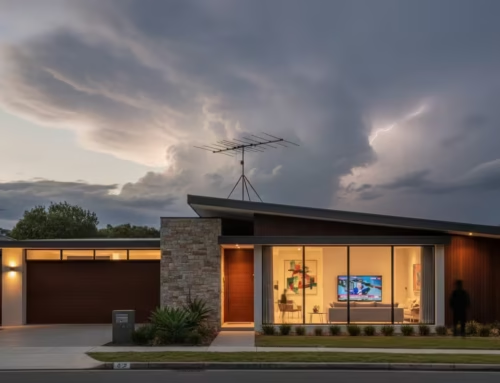
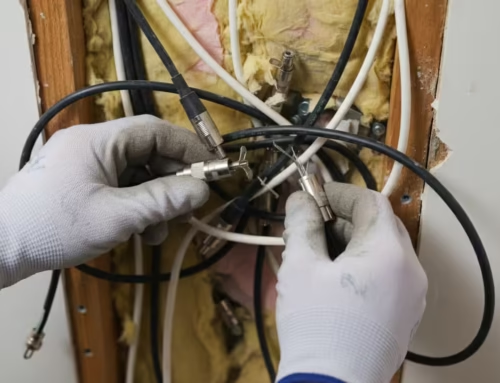
Each television delivery technology operates on fundamentally different principles. Digital TV antennas receive UHF signals broadcast at frequencies between 520-820 MHz from terrestrial transmitters including Artarmon, Gore Hill, and Balgowlah. These signals travel directly through the air to your rooftop antenna, which captures them and delivers them via RG6 coaxial cable to your television’s digital tuner.
Cable television relies on extensive underground or overhead coaxial cable networks that distribute signals from a central headend facility to individual premises. The network operator controls signal distribution, requiring powered amplifiers and active network equipment throughout the infrastructure.
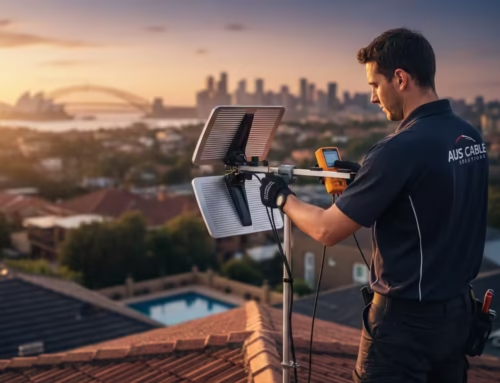
Satellite television uses a dish antenna to receive Ku-band signals (10.7-12.75 GHz) from geostationary satellites positioned approximately 36,000 kilometres above the equator. The dish focuses these signals onto an LNB (Low-Noise Block downconverter), which converts them to lower frequencies for transmission via RG6 coaxial cable to a set-top box.
Under the Telecommunications Act 1997 (Cth) and Australian Communications and Media Authority (ACMA) Cabling Provider Rules 2014, all three technologies require installation by ACMA-registered cablers holding Open Cabler Registration for coaxial cabling work. This legal requirement ensures installations meet Australian safety and technical standards regardless of which technology you choose.
Signal Strength and Consistency: Technical Comparison
Signal strength measurements reveal significant differences in how each technology performs. Properly installed UHF antennas in Sydney typically receive signals at -30 to -60 dBm from major transmitters, with antenna gain (measured in dBi) amplifying these signals before distribution. A quality UHF antenna with 10-15 dBi gain provides excellent signal margins even in challenging locations.
Cable television systems maintain signal levels through active amplification, typically delivering -10 to +15 dBm at the wall outlet. However, this consistency depends entirely on network infrastructure remaining powered and operational. Any failure in the distribution network affects all connected premises simultaneously.
Satellite signals arrive at the dish at extremely low power levels, typically -60 to -80 dBm, requiring the LNB to amplify them significantly. The long signal path through the atmosphere makes satellite signals particularly vulnerable to atmospheric interference, especially during heavy rain when signal attenuation can exceed 10-15 dB.
For homeowners experiencing weak signals, understanding how to boost antenna signal in Sydney through proper antenna selection, optimal positioning, and quality RG6 coaxial cable makes a measurable difference in reception reliability.
How Weather Conditions Impact Each Technology
Weather represents one of the most significant reliability differentiators between these technologies. UHF television signals used by digital antennas pass through rain, fog, and wind with minimal attenuation. The wavelength of UHF signals (approximately 37-58 cm) is far larger than raindrops, meaning precipitation causes negligible signal loss. Wind can affect poorly mounted antennas, but professional installations using quality J-mounts or tilt mounts secured to structural members remain stable even in severe weather.
Satellite television experiences pronounced rain fade during heavy precipitation. When rain intensity exceeds approximately 25 mm per hour, the accumulated water droplets along the 36,000-kilometre signal path can attenuate Ku-band signals by 10-15 dB or more. This attenuation frequently causes picture pixelation or complete signal loss during Sydney’s summer thunderstorms. Coastal suburbs like Manly, Coogee, and Vaucluse experience this issue more frequently due to higher rainfall intensity.
Cable television infrastructure can be damaged by severe weather events. Underground cables may flood, overhead cables can be damaged by falling branches, and network amplifiers can fail during power outages. Storm damage often affects entire neighbourhoods simultaneously, with restoration depending on the network operator’s response time.
Understanding how weather affects your antenna signal helps homeowners appreciate why properly installed UHF antennas provide superior weather reliability compared to higher-frequency satellite systems or infrastructure-dependent cable networks.
Infrastructure Dependency and Service Interruptions
Infrastructure dependency directly impacts reliability. Digital TV antennas operate independently of any network infrastructure. Once professionally installed by an ACMA-licensed cabler, the system receives broadcast signals continuously without requiring external network connections, powered amplifiers in the distribution network, or service provider infrastructure. The Australian Bureau of Statistics (ABS) reports that 99% of Australian households have access to digital television services, with antenna-based free-to-air TV remaining the primary viewing method for news and emergency broadcasts.
Cable television depends entirely on the network operator’s infrastructure. Communications Alliance data indicates that cable television infrastructure covers approximately 30% of Australian premises, primarily in metropolitan areas. Service interruptions occur when network equipment fails, cables are damaged, or power outages affect distribution amplifiers. Repairs require the network operator to dispatch technicians, with restoration times varying from hours to days depending on the nature and extent of damage.
Satellite television requires functioning satellite transponders, properly aligned dishes, and powered LNBs and set-top boxes. While satellite infrastructure is generally reliable, signal blockage from tree growth, dish misalignment from wind, or LNB failure can interrupt service. Unlike antenna systems where signals continue broadcasting regardless of individual installation issues, satellite problems require service calls and potential equipment replacement.
By the Numbers
- STATAccording to the Australian Communications and Media Authority (ACMA), over 13 million Australians access free-to-air television services, representing the most widely used television platform in Australia
- STATThe Australian Bureau of Statistics (ABS) reports that 99% of Australian households have access to digital television services, with antenna-based free-to-air TV remaining the primary viewing method for news and emergency broadcasts
- STATCommunications Alliance data indicates that cable television infrastructure covers approximately 30% of Australian premises, primarily in metropolitan areas, while satellite services are predominantly used in regional and remote locations
Why Digital TV Antennas Offer Superior Reliability in Sydney
Digital TV antennas deliver exceptional reliability in Sydney due to the city’s excellent transmitter coverage and the inherent advantages of UHF broadcast technology. Major transmitters at Artarmon, Gore Hill, and Balgowlah provide strong signal coverage across Greater Sydney, with most suburbs receiving signals well above the minimum threshold required for reliable reception.
The direct line-of-sight nature of UHF broadcasting means signals travel from transmitter to antenna without intermediate infrastructure that can fail. Once Sydney Cabling installs a properly specified antenna with appropriate gain for your location, connected via quality RG6 coaxial cable with correct F-type connectors, the system operates reliably for years with minimal maintenance. Our technician Fred has installed antennas in suburbs from St Ives to Forestville that continue delivering perfect reception after more than a decade.
Multi-room distribution using properly calculated splitters or distribution amplifiers ensures consistent signal strength to every television outlet. Unlike cable or satellite systems that may charge additional fees for multi-room viewing, antenna systems distribute free-to-air signals to unlimited televisions once the distribution infrastructure is correctly installed.
For homeowners new to antenna technology, our practical guide to antennas and TV reception explains the fundamental principles that make properly installed antenna systems so reliable. The numerous advantages of TV antennas over satellite or cable extend beyond reliability to include zero ongoing costs and complete independence from service providers.
Satellite TV: Reliability Factors and Limitations
Satellite television offers extensive channel selection and nationwide coverage, making it valuable for regional areas beyond terrestrial transmitter range. However, several factors affect satellite reliability in Sydney where antenna alternatives exist. The primary limitation remains rain fade, which occurs when heavy precipitation attenuates the Ku-band signal travelling from the satellite to your dish.
Satellite dishes require precise alignment to the satellite’s orbital position. Even minor movement from wind, building settlement, or accidental contact can degrade signal quality. The LNB mounted on the dish arm requires power supplied through the coaxial cable from the set-top box, meaning power outages interrupt satellite reception even though the satellite continues broadcasting.
Tree growth represents another reliability concern. A dish installed with clear line-of-sight may experience signal blockage years later as nearby trees mature. Unlike UHF antenna signals that can diffract around minor obstructions, Ku-band satellite signals require completely unobstructed line-of-sight to the satellite’s position in the northern sky.
For homeowners considering satellite options, our complete guide to Foxtel installation covers the technical requirements and installation considerations. Under the Australian Communications and Media Authority (ACMA) Cabling Provider Rules 2014, satellite dish installation requires the same ACMA licensing as antenna installation, ensuring proper grounding and compliance with the Work Health and Safety Act 2011 (NSW).
Cable TV: Network Dependency and Outage Risks
Cable television reliability depends entirely on the network operator maintaining functional infrastructure throughout the distribution network. While cable systems can deliver excellent picture quality when operating normally, several factors introduce reliability concerns compared to antenna-based reception.
Network outages affect all subscribers in the impacted area simultaneously. Equipment failures at headend facilities, damaged trunk cables, or failed distribution amplifiers can interrupt service to entire suburbs. Unlike antenna systems where individual installations operate independently, cable subscribers depend on the network operator’s maintenance practices and response times.
Power outages typically disable cable television service because distribution amplifiers throughout the network require continuous power. While some operators provide battery backup for critical network equipment, extended outages eventually exhaust backup power capacity. During emergency situations when television access becomes critical for news and emergency broadcasts, this infrastructure dependency represents a significant reliability limitation.
Network congestion can also affect cable television quality during peak viewing periods, though modern digital cable systems have largely mitigated this issue compared to older analog systems. Service quality ultimately depends on the network operator’s infrastructure investment and maintenance commitment.
Maintenance Requirements and Long-Term Reliability
Long-term reliability depends significantly on maintenance requirements for each technology. Digital TV antennas installed to professional standards require minimal ongoing maintenance. Quality antennas constructed from corrosion-resistant materials and properly mounted to structural members using appropriate hardware can operate reliably for 15-20 years or more. Sydney Cabling offers up to 20 years warranty on certain parts and labour, reflecting the exceptional longevity of professionally installed antenna systems.
Periodic inspection helps identify potential issues before they affect reception. Checking antenna mounting hardware for corrosion, verifying coaxial cable connections remain weather-tight, and confirming the antenna maintains proper alignment ensures continued reliable operation. Homeowners should watch for signs your TV antenna needs repair such as intermittent signal loss, pixelation, or reduced channel availability.
Satellite systems require more frequent maintenance. LNBs typically last 5-10 years before requiring replacement. Dish alignment can drift over time, requiring professional realignment. The set-top box represents another potential failure point, with electronic components that may require replacement every 5-7 years.
Cable television maintenance responsibility lies primarily with the network operator, though the coaxial cable and connections within your property require occasional inspection. Corroded F-type connectors or damaged internal cabling can degrade signal quality even when the network operates normally.
The benefits of regular TV antenna maintenance extend beyond reliability to include optimized signal strength, extended equipment life, and early detection of potential issues before they cause service interruption.
Important:
Cost vs Reliability: Which Offers Best Value for Sydney Households?
Total cost of ownership reveals significant differences between these technologies. Digital TV antenna installation represents a one-time investment, typically ranging from $300-$800 for professional installation including antenna, mounting hardware, RG6 coaxial cable, and labour. Once installed, the system delivers free-to-air channels indefinitely with zero monthly subscription fees. Over a 10-year period, this represents the lowest total cost by a substantial margin.
Cable television requires monthly subscription fees typically ranging from $30-$100 or more depending on channel packages. Over 10 years, even a modest $50 monthly subscription totals $6,000 plus installation costs. Premium channel packages can double or triple this amount.
Satellite television involves similar monthly subscription costs, typically $40-$150 depending on packages and premium channels. Installation costs may be subsidized by the service provider but are ultimately recovered through subscription fees. Over 10 years, total costs easily exceed $5,000-$15,000.
When evaluating cost versus reliability, digital TV antennas deliver exceptional value for Sydney households. The combination of zero ongoing costs, superior weather reliability, infrastructure independence, and minimal maintenance requirements makes professionally installed antenna systems the most cost-effective choice for accessing free-to-air television channels.
For households requiring premium sports or entertainment channels unavailable on free-to-air television, combining a digital antenna for reliable free-to-air reception with streaming services for premium content often provides better value than cable or satellite subscriptions.
ACMA Licensing Requirements for Professional Installation
Regardless of which technology you choose, professional installation by properly licensed cablers is both a legal requirement and a reliability factor. The Telecommunications Act 1997 (Cth) establishes the regulatory framework requiring ACMA registration for all cabling work. The Australian Communications and Media Authority (ACMA) Cabling Provider Rules 2014 specify that antenna, cable, and satellite installations must be performed by cablers holding Open Cabler Registration.
This licensing requirement exists to ensure installations meet Australian technical standards for signal quality, electrical safety, and structural integrity. Licensed cablers understand proper grounding techniques required under the Work Health and Safety Act 2011 (NSW), correct coaxial cable specifications for different applications, and appropriate mounting methods that withstand Sydney’s weather conditions.
Sydney Cabling maintains current ACMA Cabling Registration and Open Cabler Registration, with all technicians trained in current regulations and installation standards. Our 40,000 completed jobs across Greater Sydney demonstrate our commitment to compliant, reliable installations that deliver long-term performance.
Unlicensed installation attempts not only violate Commonwealth telecommunications law but typically result in poor reliability due to incorrect antenna selection, improper mounting, inadequate cable specifications, or missing surge protection. NSW Fair Trading actively investigates unlicensed cabling work, with penalties including substantial fines.
- ✓
Verify your suburb’s proximity to Sydney transmitters (Artarmon, Gore Hill, Balgowlah) to assess antenna signal strength potential - ✓
Check if your property has existing coaxial cabling infrastructure (RG6 or RG11) that can support antenna, cable, or satellite connections - ✓
Confirm the installer holds current ACMA Cabling Registration and Open Cabler Registration as required under the Australian Communications and Media Authority (ACMA) Cabling Provider Rules 2014 - ✓
Compare total cost of ownership: one-time antenna installation versus ongoing monthly subscription fees for cable or satellite services - ✓
Assess weather exposure at your property—coastal suburbs like Manly, Coogee, or Bayview may experience more satellite rain fade than antenna signal issues - ✓
Determine if you need multi-room distribution, which requires proper splitters, distribution amplifiers, and impedance-matched RG6 coaxial cable regardless of technology - ✓
Request warranty details—Sydney Cabling offers up to 20 years warranty on certain parts and labour for antenna installations
Frequently Asked Questions
Which is more reliable in bad weather: antenna, cable, or satellite?
Digital TV antennas are most reliable in bad weather, as UHF signals (typically 520-820 MHz in Sydney) are minimally affected by rain or wind. Satellite signals experience rain fade when heavy precipitation blocks the Ku-band signal (10.7-12.75 GHz), while cable reliability depends on network infrastructure that can be damaged by storms. Under the Australian Communications and Media Authority (ACMA) Cabling Provider Rules 2014, only licensed cablers can install or repair antenna systems to ensure optimal weather-resistant performance.
Do I need a licensed cabler to install an antenna, cable, or satellite system?
Yes, under the Australian Communications and Media Authority (ACMA) Cabling Provider Rules 2014, all antenna, cable, and satellite installations must be performed by an ACMA-registered cabler holding Open Cabler Registration for coaxial cabling work. This requirement is mandated by the Telecommunications Act 1997 (Cth) to ensure installations meet Australian safety and technical standards. Unlicensed installation can result in penalties and may void equipment warranties.
Which technology has the lowest ongoing costs in Sydney?
Digital TV antennas have the lowest ongoing costs, with zero monthly subscription fees for free-to-air channels broadcast from transmitters including Artarmon, Gore Hill, and Balgowlah. Cable and satellite services require monthly subscriptions typically ranging from $30-$150+. Once professionally installed by an ACMA-licensed cabler, antennas require only occasional maintenance, with Sydney Cabling offering up to 20 years warranty on certain parts and labour.
Can antenna signals be as strong as cable or satellite in Sydney suburbs?
Yes, properly installed UHF antennas in Sydney typically receive signals at -30 to -60 dBm from major transmitters, providing excellent picture quality comparable to cable and satellite. Antenna gain (measured in dBi) and quality RG6 coaxial cable ensure strong signal distribution to multiple TVs. In suburbs like Coogee, Manly, Castle Hill, and Lindfield, professional antenna installation by licensed cablers achieves reliable reception without monthly fees or network dependency.
What happens to each technology during a power outage?
During power outages, digital TV antennas continue receiving broadcast signals—your TV simply needs power to display them. Cable TV services typically fail during outages as network infrastructure requires power, though some providers use battery backup. Satellite dishes receive signals but require powered set-top boxes and LNBs (Low-Noise Block downconverters). Under the Work Health and Safety Act 2011 (NSW), ACMA-licensed cablers ensure all installations include proper grounding and surge protection.
Sydney Cabling has completed over 40,000 antenna installations across Greater Sydney in 15+ years, helping homeowners in Coogee, Vaucluse, St Ives, Lindfield, Manly, Forestville, Castle Hill, and surrounding suburbs choose the most reliable TV solution for their conditions. Our ACMA-licensed cablers provide expert assessment of antenna, cable, and satellite options with up to 20 years warranty on certain parts and labour. Contact Sydney Cabling today for a professional reliability assessment tailored to your suburb and viewing needs.
ACMA licensed. 15+ years experience. Over 40,000 completed jobs across Greater Sydney. Up to 20-year warranty on parts and labour.