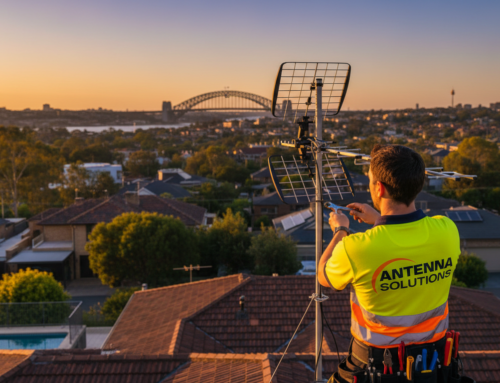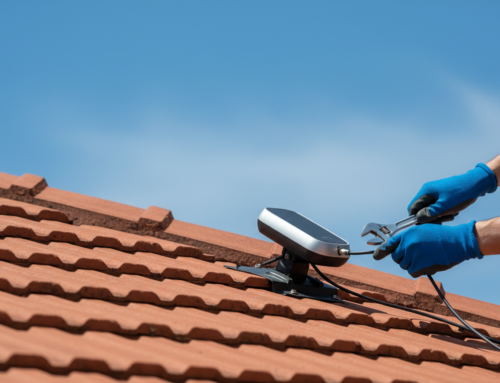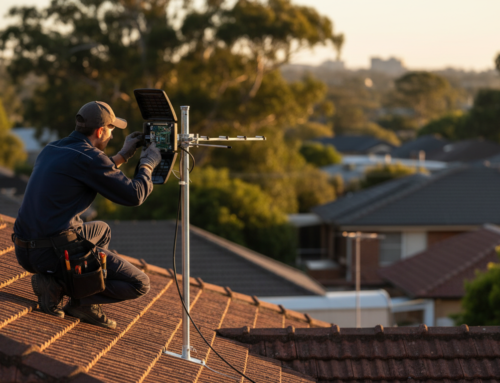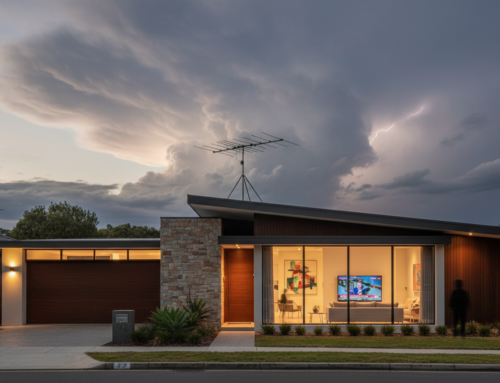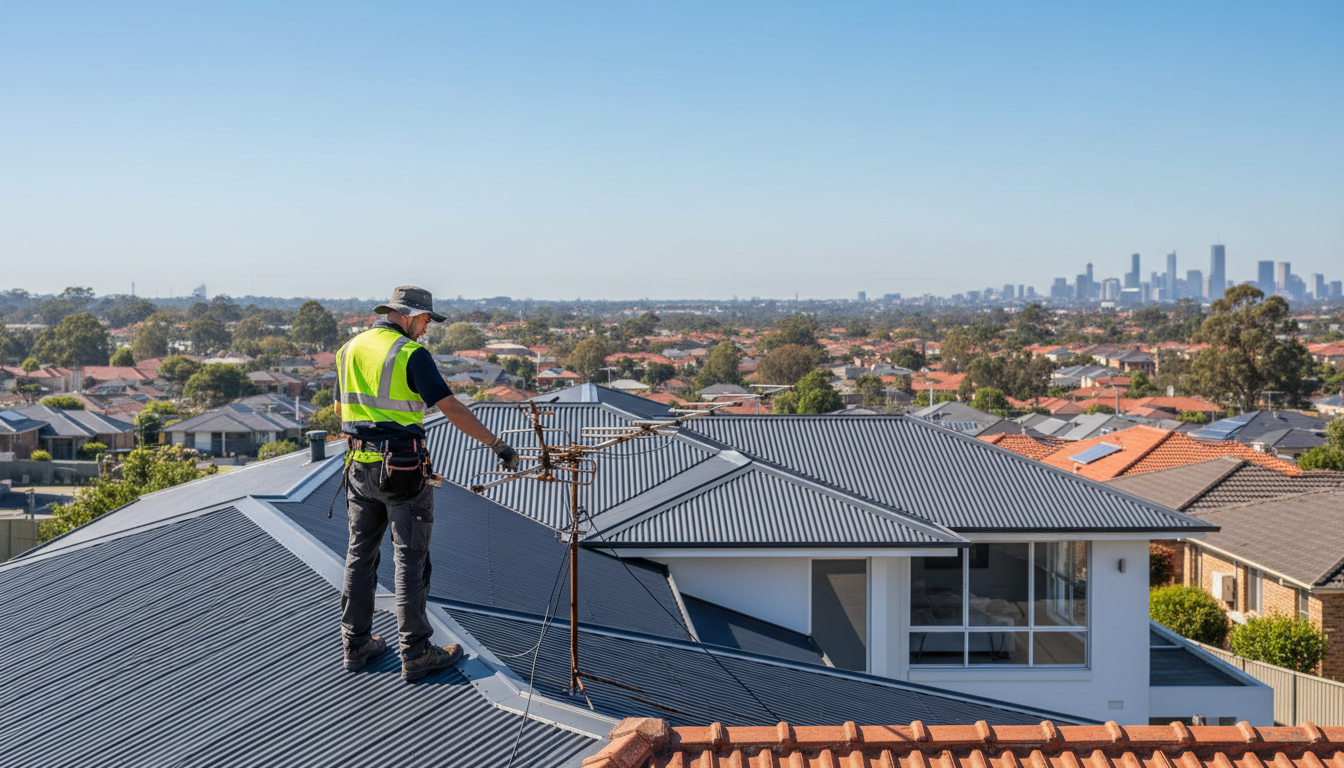
When your television picture starts pixelating, freezing, or displaying “no signal” messages, the problem usually lies with your TV aerial system rather than your television set. Across Greater Sydney, tv aerial repairs sydney technicians diagnose thousands of antenna faults each year, from corroded connections and storm-damaged elements to inadequate signal strength and interference from mobile towers. Understanding the technical causes behind these common problems helps homeowners recognise when professional assessment is needed and what safe diagnostic steps can be performed before calling a licensed cabler. Sydney Cabling has identified recurring patterns across more than 40,000 completed jobs throughout Sydney’s metro, coastal, and harbour suburbs, providing insight into the most frequent antenna failures affecting Australian households. Recognising the 5 signs your TV antenna needs repair helps prevent minor issues from escalating into complete signal loss requiring emergency service calls.
What Causes TV Aerial Problems in Sydney Homes?
Television aerial problems stem from four primary categories: physical damage to antenna elements and mounting hardware, degraded coaxial cable and connections, insufficient signal strength relative to your location and distribution requirements, and external interference from mobile networks or electrical sources. According to the Australian Communications and Media Authority (ACMA), over 13 million Australians continue to rely on free-to-air digital television, making antenna reliability essential for household connectivity. Sydney’s coastal climate accelerates many failure modes, with salt air corroding aluminium antenna elements and brass F-type connectors, UV radiation degrading cable sheathing, and frequent wind events loosening mounting brackets or misaligning directional UHF antennas. The Australian Bureau of Statistics (ABS) reports that Greater Sydney experiences an average of 149 days per year with measurable rainfall, contributing to accelerated corrosion of outdoor antenna components in coastal and harbour-adjacent suburbs.
Digital television requires consistent signal strength above -65 dBm for reliable reception, with most Sydney transmitters broadcasting UHF channels from facilities at Artarmon, Bringelly, and Terrey Hills. When signal strength drops below this threshold due to antenna damage, cable loss, or inadequate antenna gain, digital tuners cannot maintain lock on the broadcast stream, resulting in the characteristic pixelation and freezing that homeowners interpret as “bad reception.” Unlike analogue television which degraded gradually into snowy pictures, digital signals maintain perfect quality until they cross a cliff-edge threshold where reception fails completely. This binary characteristic means minor degradation in your antenna system can suddenly manifest as unwatchable television, even though the underlying problem may have been developing slowly over months or years.
By the Numbers
- STATAccording to the Australian Communications and Media Authority (ACMA), over 13 million Australians continue to rely on free-to-air digital television, making antenna reliability essential for household connectivity
- STATThe Australian Bureau of Statistics (ABS) reports that Greater Sydney experiences an average of 149 days per year with measurable rainfall, contributing to accelerated corrosion of outdoor antenna components in coastal and harbour-adjacent suburbs
- STATCommunications Alliance data indicates that improper antenna installation and maintenance accounts for approximately 60% of residential TV reception complaints lodged with telecommunications providers across NSW
Pixelation and Freezing: Signal Strength Issues Explained
Pixelation occurs when your television receives insufficient signal strength to decode the digital broadcast stream reliably, causing the decoder to display incomplete frame data as blocky artefacts or frozen images. Licensed cablers measure signal strength in dBm (decibels relative to one milliwatt), with optimal reception typically requiring -50 to -65 dBm depending on your television tuner quality and the specific broadcast channel. When signal strength drops into the -70 to -80 dBm range, you experience intermittent pixelation that worsens during adverse weather or peak viewing hours when atmospheric conditions affect UHF propagation. Below -80 dBm, most digital tuners lose lock entirely, displaying “no signal” or “weak signal” messages rather than attempting to decode corrupted data.
Several technical factors reduce signal strength between the broadcast transmitter and your television tuner. Inadequate antenna gain represents the most common cause, particularly when older VHF antennas remain installed despite Sydney’s complete transition to UHF digital broadcasting. Modern UHF antennas provide 10-14 dBi gain across channels 28-51, whereas legacy VHF antennas offer minimal gain on UHF frequencies, resulting in marginal reception even in strong signal areas. Corroded F-type connectors introduce impedance mismatches that reflect signal back toward the antenna rather than delivering it to your television, with each poor connection potentially reducing signal by 3-6 dB. Excessive splitter insertion loss compounds the problem in homes with multiple television outlets, as each passive splitter divides available signal power among its output ports.
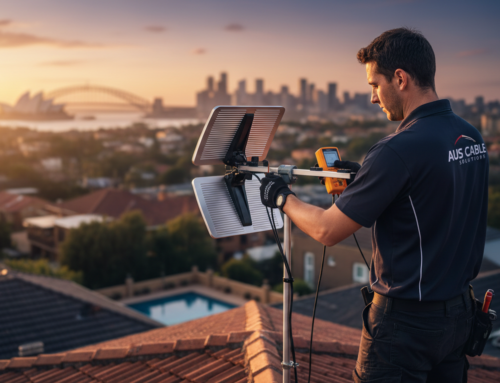
Fred, our lead technician at Sydney Cabling, regularly encounters homes where signal strength measures -55 dBm at the antenna but only -75 dBm at the television due to accumulated losses through degraded RG6 coaxial cable, multiple splitters, and corroded connections. Understanding how to boost your antenna signal requires professional assessment of your complete distribution system, from antenna gain and orientation through to cable quality and splitter configuration. Licensed cablers use calibrated signal meters to measure both signal strength (dBm) and signal quality (MER – Modulation Error Ratio), identifying whether your reception problems stem from insufficient signal capture at the antenna or excessive loss in your distribution system.
Complete Signal Loss: Antenna Alignment and Physical Damage
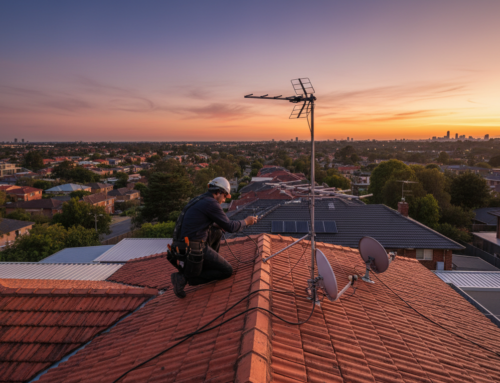
Total signal loss typically indicates physical antenna damage, complete misalignment, or severed coaxial cable rather than gradual degradation. UHF antennas are directional devices that must point toward the broadcast transmitter within approximately 20 degrees to maintain optimal reception, with signal strength dropping rapidly as the antenna rotates away from the transmitter bearing. Strong wind events can rotate antennas on their mounts, particularly when mounting brackets have corroded or loosened over years of thermal cycling and vibration. Suburbs throughout the Eastern Suburbs, Northern Beaches, and Lower North Shore experience frequent south-easterly winds that place sustained lateral loads on rooftop antennas, gradually loosening J-mounts and tilt brackets until a single strong gust rotates the antenna away from the Artarmon or Terrey Hills transmitters.
Physical damage to antenna elements eliminates reception entirely when driven elements (the active receiving components) break or separate from the boom. Aluminium antenna elements fatigue over time due to wind-induced vibration, developing stress cracks at mounting points that eventually fracture during storms. Coastal suburbs including Bondi, Coogee, Manly, and Cronulla experience accelerated corrosion that weakens element-to-boom connections, allowing elements to separate during relatively moderate wind events. Once a driven element fails, the antenna cannot receive signals regardless of transmitter power or your location within the coverage area. Similarly, damage to the antenna’s balun (the device that converts the balanced antenna impedance to unbalanced coaxial cable impedance) results in complete signal loss even when all elements remain physically intact.
Severed or crushed coaxial cable produces identical symptoms to antenna failure, as no signal path exists between the antenna and your television. Cable damage often occurs where the coaxial cable enters the roof space through tile penetrations or where it runs along gutters exposed to foot traffic during roof maintenance. Possums and birds occasionally chew through cable sheathing, exposing the copper braid to moisture and creating short circuits that block all signal transmission. Under the Telecommunications Act 1997 (Cth) and Australian Communications and Media Authority (ACMA) Cabling Provider Rules 2014, only registered cablers holding Open Cabler Registration can legally perform antenna realignment, element replacement, or cable repairs, as these activities constitute telecommunications cabling work requiring specific licensing and compliance with technical standards.
Corroded Connections and Degraded Coaxial Cable (RG6/RG11)
Coaxial cable degradation represents one of the most common yet overlooked causes of television aerial problems in Sydney homes, particularly in installations exceeding 10-15 years of age. RG6 coaxial cable, the standard for residential antenna installations, consists of a copper center conductor, polyethylene dielectric insulation, aluminium foil shield, copper braid, and PVC outer jacket. Over time, UV exposure degrades the outer jacket, allowing moisture to penetrate to the copper braid where it causes oxidation that increases cable resistance and reduces signal transmission. Sydney’s coastal humidity accelerates this process, with homes in suburbs within 5 kilometres of the coastline experiencing significantly faster cable degradation than inland locations.
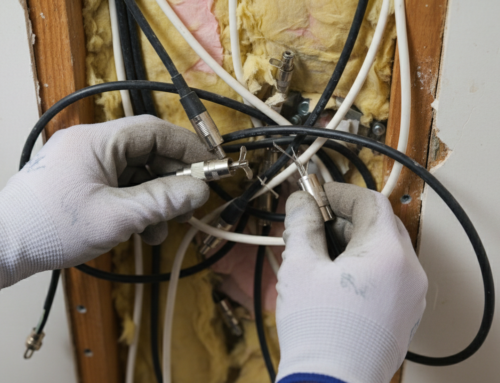
F-type connectors, the threaded coaxial connectors used throughout antenna systems, corrode when moisture penetrates the connection point between the cable and the connector body. Brass F-type connectors develop green copper oxide corrosion in coastal environments, creating high-resistance connections that reflect signal rather than transmitting it efficiently to your television. Each corroded connection can introduce 3-8 dB of signal loss, with multiple poor connections throughout a distribution system accumulating sufficient loss to drop signal strength below the -65 dBm threshold required for reliable digital reception. Licensed cablers identify corroded connections by measuring signal strength at multiple points throughout the distribution system, isolating which connections require replacement versus which cables need complete renewal.
RG6 cable exhibits approximately 5-6 dB loss per 100 metres at UHF frequencies, meaning a 20-metre cable run from rooftop antenna to ground floor television introduces roughly 1 dB of signal loss under ideal conditions. However, cable that has experienced moisture ingress, UV damage, or physical crushing can exhibit double or triple this loss factor, turning a marginal signal into an unusable one. RG11 cable, with its larger diameter and lower loss characteristics (approximately 3.5 dB per 100 metres), provides superior performance for long cable runs exceeding 30 metres or for distribution systems serving multiple televisions, though its increased cost and reduced flexibility make it unnecessary for typical single-storey homes with short cable runs. Sydney Cabling stocks both RG6 and RG11 cable and selects the appropriate specification based on your cable run length, signal strength at the antenna, and distribution requirements.
Weather-Related Damage: Wind, Salt Air, and Storm Impact
Sydney’s coastal climate subjects television aerials to environmental stresses that accelerate component failure compared to inland or temperate regions. Salt-laden air from the Tasman Sea deposits sodium chloride on antenna elements, mounting brackets, and coaxial cable fittings, initiating electrochemical corrosion that weakens aluminium elements and brass connectors. Suburbs including Bondi, Bronte, Coogee, Maroubra, Cronulla, Manly, Dee Why, and Collaroy experience the most aggressive corrosion rates, with antennas in these locations typically requiring replacement every 8-12 years compared to 15-20 years for installations in Western Sydney suburbs such as Parramatta, Blacktown, or Penrith. Understanding how Sydney weather affects antenna performance helps homeowners in coastal locations anticipate maintenance requirements and budget for periodic antenna replacement.
Wind loading represents the primary mechanical stress on rooftop antennas, with sustained winds creating cyclic fatigue in mounting brackets and antenna booms. UHF antennas present significant wind resistance due to their multiple elements and large boom length, typically 1-1.5 metres for high-gain models. During Sydney’s characteristic south-easterly wind events, antennas experience sustained lateral loads that gradually loosen mounting bolts, bend J-mounts, or crack tile mounts. Storm events with wind gusts exceeding 80-100 kilometres per hour can rotate poorly secured antennas, snap corroded elements, or completely detach antennas from their mounts. Following major storm events, Sydney Cabling receives elevated service requests from suburbs throughout the Eastern Suburbs, Northern Beaches, and harbour foreshores where wind exposure is greatest.
UV radiation from Sydney’s intense summer sun degrades the PVC jacket on coaxial cable, causing it to become brittle and crack after 10-15 years of exposure. Once the outer jacket fails, moisture penetrates to the copper braid where it causes the oxidation and signal loss described earlier. Cable runs along roof surfaces or through unshaded areas experience the most severe UV damage, whereas cable routed through roof spaces or along shaded eaves maintains integrity significantly longer. Thermal cycling between Sydney’s summer temperatures exceeding 35 degrees Celsius and winter lows around 8-10 degrees causes expansion and contraction of mounting hardware, gradually loosening bolts and allowing antennas to shift position over time. Regular maintenance inspections every 3-5 years identify early signs of weather-related degradation before complete failure occurs, a preventative approach that proves more cost-effective than emergency repairs following signal loss.
Weak Signal Across Multiple TVs: Splitter and Amplifier Faults
Homes with multiple television outlets rely on passive splitters or active distribution amplifiers to divide the antenna signal among several receivers. Passive splitters introduce insertion loss that reduces signal strength at each output port, with two-way splitters typically causing 3.5 dB loss, four-way splitters introducing 7 dB loss, and eight-way splitters reducing signal by 10.5 dB or more. When your antenna delivers marginal signal strength of -60 dBm, a four-way splitter reduces this to -67 dBm at each television, placing reception right at the threshold where pixelation begins. If any additional signal loss occurs due to cable degradation or poor connections, all televisions in the home experience simultaneous reception problems.
Distribution amplifiers solve this problem by boosting antenna signal before splitting it among multiple outlets, typically providing 15-20 dB of gain to overcome splitter insertion loss and cable attenuation. However, distribution amplifiers require mains power and can fail when their internal power supplies degrade or when lightning-induced surges damage their amplification circuitry. A failed distribution amplifier blocks signal transmission entirely, causing all televisions in the home to lose reception simultaneously. This symptom distinguishes amplifier failure from antenna problems, which typically affect all televisions equally but gradually rather than suddenly. Distribution amplifiers also introduce noise when they begin to fail, degrading signal quality (MER) even when signal strength appears adequate, resulting in pixelation despite seemingly sufficient signal levels.
Incorrectly specified amplifiers cause reception problems even when functioning normally. Over-amplification drives television tuners into compression, where excessive signal strength causes intermodulation distortion that manifests as pixelation or complete loss of specific channels. Under-amplification fails to overcome distribution system losses, leaving insufficient signal at distant television outlets. Licensed cablers calculate required amplifier gain based on signal strength at the antenna, total cable length, number of splits, and number of television outlets, ensuring the amplifier provides adequate signal to all locations without over-driving nearby outlets. Sydney Cabling’s technicians carry calibrated signal meters to measure both strength and quality at each television outlet, identifying whether your distribution system requires amplifier installation, amplifier replacement, or reconfiguration to reduce excessive splitting.
Interference from 4G/5G Mobile Towers and Electrical Sources
Mobile network interference has emerged as a significant cause of television reception problems as telecommunications carriers deploy 4G and 5G base stations throughout Sydney’s residential suburbs. Mobile networks operate in frequency bands adjacent to UHF television channels, with 4G services using 700 MHz spectrum (channels 52-69) that was formerly allocated to television broadcasting. Although Australian digital television now operates exclusively on channels 6-51, strong mobile signals can overload television tuners and distribution amplifiers, causing intermodulation products that appear as pixelation or complete signal loss on specific channels. Homes within 500 metres of mobile base stations experience the highest interference risk, particularly when the base station antenna points toward the property.
4G/5G interference typically affects only certain television channels rather than all channels simultaneously, as the interference mechanism depends on the specific frequencies being transmitted by nearby base stations and received by your antenna. Licensed cablers install LTE filters (also called 4G filters) inline with your antenna system to block mobile network frequencies while passing television channels without attenuation. These filters prove essential in suburbs with dense mobile network infrastructure, including the Sydney CBD, North Sydney, Chatswood, Parramatta, and other commercial centres where carriers operate multiple base stations to handle high user density. Without proper filtering, even a perfectly functioning antenna system delivers unreliable reception when subjected to strong mobile network signals.
Electrical interference from household devices, solar panel inverters, LED lighting drivers, and poorly suppressed electric motors can also disrupt television reception. Switch-mode power supplies used in modern electronics generate broadband radio frequency noise that couples into antenna systems through coaxial cable shields or radiates directly to the antenna. Solar panel installations have introduced a new interference source, as some inverter models generate significant RF noise in the UHF television band. This interference typically manifests as pixelation that varies with time of day (corresponding to solar generation periods) or that appears when specific appliances operate. Licensed cablers identify electrical interference using spectrum analysers that display the RF environment, distinguishing between weak antenna signals and interference-corrupted signals that require filtering or noise source suppression.
When to Call a Licensed Cabler: ACMA Requirements and Safety
The Telecommunications Act 1997 (Cth) establishes the legal framework requiring all telecommunications cabling work, including antenna installation and repair, to be performed by registered cablers. The Australian Communications and Media Authority (ACMA) Cabling Provider Rules 2014 implement this requirement, mandating that anyone performing cabling work must hold appropriate ACMA registration (Open Cabler Registration for antenna work) and comply with AS/CA S009 and AS/CA S042 technical standards. These regulations exist to ensure antenna systems meet technical performance standards, do not cause interference to other telecommunications services, and are installed safely in accordance with electrical safety and working-at-heights requirements. Homeowners who attempt DIY antenna repairs risk prosecution under telecommunications law, invalidation of home insurance coverage, and serious injury from falls or electrical contact.
The Work Health and Safety Act 2011 (NSW) and Work Health and Safety Regulation 2017 (NSW) classify rooftop work as high-risk construction work requiring specific safety measures including fall protection, appropriate footwear, and awareness of electrical hazards from overhead power lines. Licensed cablers carry public liability insurance, maintain current working-at-heights certification, and use appropriate safety equipment including harnesses, roof ladders, and non-conductive tools. Falls from roofs represent one of the most common causes of serious injury and death in residential maintenance work, with NSW Fair Trading regularly publishing safety warnings about DIY rooftop activities. Beyond the legal and safety imperatives, licensed cablers possess calibrated test equipment, technical knowledge of RF propagation and antenna theory, and access to quality components that ensure repairs deliver reliable long-term performance rather than temporary fixes. Understanding why DIY antenna repairs are dangerous and often illegal helps homeowners make informed decisions about engaging qualified professionals.
You should contact a licensed cabler when you experience persistent pixelation or freezing that does not resolve after performing safe homeowner checks, when you observe physical damage to your antenna or mounting hardware, when signal problems began following a storm or high wind event, when reception has gradually degraded over weeks or months, or when you are planning renovations that may affect antenna cabling. Licensed cablers provide transparent diagnostics, explaining the technical cause of your reception problems and presenting repair options with clear pricing before commencing work. Sydney Cabling offers up to 20 years warranty on certain parts and labour, providing long-term assurance that repairs will deliver reliable performance. Our technicians carry professional signal meters, stock quality RG6 coaxial cable and genuine antenna components, and complete all work in compliance with the Telecommunications Act 1997 (Cth) and ACMA Cabling Provider Rules 2014.
Safe Homeowner Checks Before Booking a Repair
Before engaging a licensed cabler for television aerial repairs, homeowners can safely perform several diagnostic checks that help identify whether the problem lies with the antenna system or with television settings and indoor connections. These checks require no rooftop access, no tools beyond visual inspection, and no modification to your antenna system, making them safe and legal for homeowners to perform. Documenting the results of these checks provides valuable diagnostic information that helps licensed cablers diagnose problems more efficiently, potentially reducing service call duration and cost. The safe troubleshooting steps homeowners can perform focus on indoor connections, television settings, and observation of symptom patterns rather than any physical work on the antenna system itself.
- ✓
Check all TV sets in your home — if only one TV has poor reception, the problem is likely the TV tuner or internal cabling, not the rooftop antenna - ✓
Inspect visible coaxial cable connections behind your TV for corrosion, loose fittings, or damaged cable sheathing (do not climb onto the roof) - ✓
Perform a channel rescan on your TV to ensure it’s tuned to the correct digital frequencies broadcast from Sydney transmitters - ✓
Note whether signal problems occur during specific weather conditions (wind, rain, storms) or times of day, as this helps diagnose intermittent faults - ✓
Check if neighbours are experiencing similar reception issues, which may indicate transmitter maintenance or local interference rather than antenna damage - ✓
Document the exact symptoms: complete signal loss, pixelation on specific channels only, or gradual degradation over weeks/months - ✓
Never attempt to climb onto your roof or adjust antenna positioning yourself — the Work Health and Safety Regulation 2017 (NSW) and ACMA Cabling Provider Rules 2014 require licensed professionals for all rooftop antenna work
Performing a channel rescan often resolves reception problems caused by transmitter frequency changes or television tuner memory corruption. Access your television’s menu system, navigate to the tuning or installation section, and select “auto scan” or “channel scan” to force your television to search for all available digital channels. This process takes 5-10 minutes and will not damage your television or antenna system. If the rescan discovers channels successfully, your antenna system is functioning and the previous problem was likely a tuner setting issue. If the rescan finds no channels or only a subset of expected channels, the problem lies with your antenna system and requires assessment by a licensed cabler. Understanding the benefits of regular antenna maintenance helps prevent many common problems through periodic inspections that identify developing issues before they cause complete signal failure.
Frequently Asked Questions
Why does my TV keep pixelating even though I have a digital antenna?
Pixelation indicates your antenna is receiving insufficient signal strength, typically below -65 dBm. This can result from corroded connections, damaged RG6 coaxial cable, misaligned antenna elements, or interference from nearby 4G/5G towers. Under the Australian Communications and Media Authority (ACMA) Cabling Provider Rules 2014, only licensed cablers can legally diagnose and repair antenna systems. A registered cabler will measure signal strength and quality at multiple points in your distribution system to identify the specific cause of inadequate signal delivery to your television tuner.
Can I repair my TV aerial myself or do I need a licensed technician?
The Telecommunications Act 1997 (Cth) and ACMA Cabling Provider Rules 2014 require all antenna installation and repair work to be performed by registered cablers holding Open Cabler Registration. Homeowners can safely check indoor connections and TV settings, but any rooftop work, cable replacement, or antenna adjustment must be completed by licensed professionals to ensure compliance and safety under the Work Health and Safety Act 2011 (NSW). DIY antenna work risks serious injury from falls, violates telecommunications law, and may void your home insurance coverage.
How long should a TV aerial last in Sydney’s coastal climate?
Quality antennas typically last 10-15 years in Sydney’s coastal suburbs, though salt air, UV exposure, and storm damage can accelerate corrosion of antenna elements and mounting hardware. Suburbs within 5 kilometres of the coast experience the most aggressive environmental conditions, with salt-laden air initiating electrochemical corrosion on aluminium elements and brass connectors. Regular maintenance inspections every 3-5 years help identify early signs of degradation before complete signal failure occurs, extending antenna service life and preventing emergency repairs.
What’s the difference between a weak signal and no signal at all?
Weak signal (typically -70 to -80 dBm) causes intermittent pixelation and freezing but maintains partial reception, often indicating corroded connections, inadequate antenna gain, or the need for a distribution amplifier. Complete signal loss (below -85 dBm or no reading) usually means physical antenna damage, severed coaxial cable, or total misalignment requiring immediate assessment by a licensed cabler. Digital television exhibits cliff-edge behaviour where reception remains perfect until signal drops below a critical threshold, then fails completely rather than degrading gradually like analogue television.
Do I need a new antenna or just repairs after a storm?
A licensed cabler must inspect your system to determine whether storm damage requires full antenna replacement or targeted repairs such as realignment, element replacement, or mounting bracket reinforcement. Sydney Cabling provides transparent diagnostics using calibrated signal meters to measure both signal strength and quality, explaining the technical cause of your reception problems before commencing any work. We offer up to 20 years warranty on certain parts and labour, ensuring you only pay for necessary work and receive long-term reliability from repairs or replacements.
Television aerial problems in Sydney homes stem from predictable technical causes that licensed cablers diagnose efficiently using professional signal meters and systematic testing procedures. Whether your reception issues result from corroded connections, storm-damaged antenna elements, inadequate signal distribution, or interference from mobile networks, professional TV antenna repairs across Sydney restore reliable free-to-air television reception while ensuring compliance with the Telecommunications Act 1997 (Cth) and ACMA Cabling Provider Rules 2014. Understanding the technical causes behind common antenna faults helps homeowners recognise when professional assessment is required and what safe diagnostic steps can be performed before engaging a licensed cabler.
Sydney Cabling has diagnosed and repaired TV aerial problems across Greater Sydney for over 15 years, completing more than 40,000 jobs with ACMA-licensed expertise. Our technicians carry professional signal meters, stock quality RG6 coaxial cable and genuine antenna components, and provide up to 20 years warranty on certain parts and labour. Contact Sydney Cabling today for fast, compliant television aerial repairs throughout Sydney’s metro and coastal suburbs.
ACMA licensed. 15+ years experience. Over 40,000 completed jobs across Greater Sydney. Up to 20-year warranty on parts and labour.