What to Do With Your TV Antenna Before Roof Replacement or Solar Installation
If you are replacing your roof, restoring existing roofing or installing solar panels, your TV antenna may need attention before the main work begins.
Planning antenna removal for roof replacement in advance can prevent an antenna, mast, mounting bracket or coaxial cable from becoming an unexpected obstacle once other trades are already onsite. The same applies to solar installation, particularly when panels are planned for the part of the roof where the antenna is currently mounted.
Not every project requires the antenna to be removed. The important step is determining what will be affected before work starts and having a plan for removal, protection, relocation and eventual TV antenna reinstallation.
Does Your TV Antenna Need to Be Removed Before Roof Work?
It depends on how the antenna is installed and how extensive the roofing work will be.
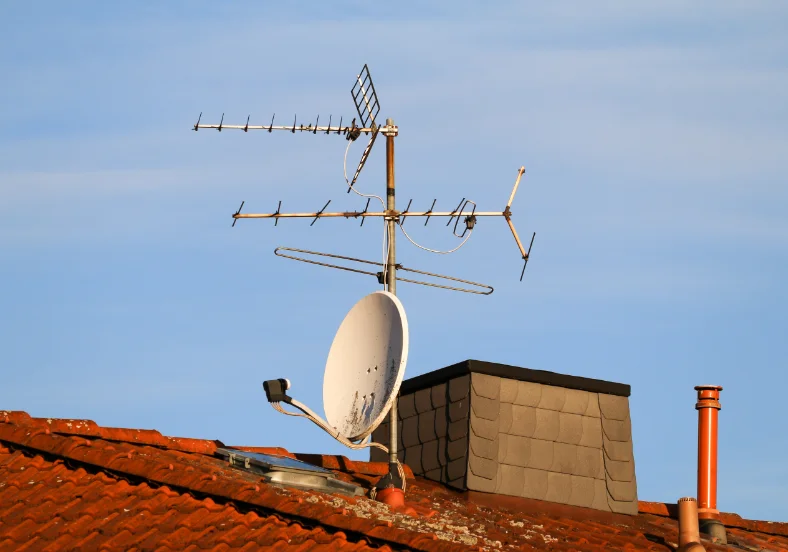
A roof-mounted antenna may need to be temporarily removed when its mast, bracket, cabling or mounting point prevents roofers from accessing tiles, sheets, battens or other parts of the roof. Existing penetrations, flashing and weather sealing may also need attention as part of a roof replacement.
For smaller repairs away from the antenna, it may be possible for the installation to remain untouched.
The best approach is to establish this before the roofer arrives. If removal is required, an antenna technician can assess the existing installation, its mounting arrangement and current position before disconnecting it.
Avoid treating removal as a last-minute DIY job. SafeWork NSW identifies roof work as a significant working-at-heights risk and recommends managing roof access using appropriate fall-prevention controls.
For Sydney homeowners who need the existing system assessed, Sydney Cabling’s residential TV antenna installation service provides further information about professional antenna assessment, positioning and installation.
Check the Antenna Before Your Roofer or Solar Installer Arrives
Before the project starts, establish:
- where the antenna and mast are mounted
- whether mounting hardware is attached to an area being replaced
- where the coaxial cable travels
- where the cable enters the roof or building
- whether solar panels are planned for the same roof area
- whether the antenna will be reused, relocated or replaced.
Photographing the existing setup from ground level can also provide a useful reference without accessing the roof.
If the antenna is already corroded, unstable, damaged or producing unreliable reception, this is also a good opportunity to have its condition assessed rather than automatically paying to remove and reinstall equipment that may soon need replacement.
Protect the Existing Coaxial Cabling
The antenna itself is only part of the system. Existing coaxial cabling also needs to be considered before construction begins.
During roofing work, an unidentified cable can potentially be cut, crushed, trapped beneath new roofing material or disconnected. Connectors left exposed during construction can also be affected by weather.
Solar installations create another consideration. Once panels have been fitted, an existing cable route may become harder to access, making future antenna servicing unnecessarily complicated.
Where an antenna is temporarily removed, the technician can identify the relevant cabling, assess its condition and plan how it will be protected until reconnection.
Good communication between the antenna technician, roofer or solar installer can prevent one trade from unintentionally creating additional work for another.
What Changes When Solar Panels Are Being Installed?
With antenna and solar panels, the main issue is usually planning the available roof space rather than assuming the solar system itself will cause reception problems.
Solar panels may occupy the antenna’s existing mounting area or make the current location impractical for future access. The mast or antenna may also physically conflict with the proposed panel layout.
For that reason, discuss the antenna position while the solar layout is still being planned.
If you need to relocate a TV antenna, the new position should consider the property’s reception conditions, suitable mounting options, roof geometry, nearby obstructions, cable routing, solar-panel layout and future maintenance access.
The best position is property-specific. Moving an antenna to an arbitrary corner of the roof or simply pointing it approximately in its previous direction does not confirm that reception will remain reliable.
Reinstalling the Antenna After Roof Replacement
Once the relevant roofing work has been completed, TV antenna reinstallation should involve more than attaching the old mast to the new roof.
The installation may require a different mounting point because the roof material, profile or available mounting area has changed. The technician should also check the condition of the antenna, mast, brackets, coaxial cable and connections before reusing them.
Position and orientation then need to suit the actual reception conditions at the property.
Sydney Cabling’s digital TV antenna installation service covers professional alignment, setup and signal testing where a new or relocated antenna is required.
Why Reception Testing Matters After Reinstallation
An antenna can look correctly positioned from the ground and still perform differently after being moved.
Relocation can change the antenna’s relationship with surrounding buildings, trees, terrain and other obstructions. Cabling or connections may also have been disturbed while construction was underway.
After the antenna is reinstalled, reception testing can check signal strength and quality, available channels and performance at connected TV outlets. Existing splitters or amplifiers may also need to be considered where they form part of the system.
This is particularly worthwhile if reception was reliable before the project but becomes unstable afterwards.
If problems remain, Sydney Cabling’s antenna repairs and maintenance service is the more appropriate resource for diagnosing reception faults rather than replacing equipment without first identifying the cause.
Should You Reinstall or Replace an Older Antenna?
A roof replacement or solar project can be a convenient time to assess an ageing antenna because access and removal are already being considered.
Replacement may be worth discussing if the existing antenna has significant corrosion, damaged elements, deteriorated mounting hardware, degraded cabling or ongoing reception problems.
That does not mean every older antenna needs replacing.
If the existing equipment remains structurally sound and provides reliable reception, reinstalling it may be perfectly reasonable. An assessment before removal can help avoid both unnecessary replacement and the cost of reinstalling equipment that is already nearing the end of its useful service life.
Coordinate the Antenna Work With Your Other Trades
Ideally, antenna work should form part of the project schedule rather than being dealt with after roofing or solar installation has started.
A typical sequence might be:
- Confirm the roofing or solar installation date.
- Determine whether the existing antenna affects the work area.
- Arrange temporary removal or relocation where required.
- Protect relevant antenna cabling.
- Complete the roofing or solar work.
- Reinstall or relocate the antenna.
- Reconnect the system and test reception.
The exact sequence can vary between properties, but giving the roofer, solar installer and antenna technician a clear plan reduces the chance of delays or improvised solutions on the day.
Before Your Roof or Solar Work Starts
Use this checklist before the project begins:
- Check the antenna location: Determine whether it conflicts with the planned work.
- Identify the cable route: Know where the coaxial cable travels and enters the building.
- Record the existing setup: Take photographs from ground level where practical.
- Arrange removal early: Book professional antenna removal if access will be affected.
- Assess the existing equipment: Decide whether the antenna is suitable for reuse.
- Plan relocation: Choose a new mounting area if solar panels will occupy the original location.
- Protect cabling: Make sure existing cable is considered during construction.
- Schedule reinstallation: Coordinate this with completion of the relevant roof work.
- Test reception: Confirm the system is operating correctly once reconnected.
Plan the Antenna Work Before the Main Project Begins
The easiest time to solve an antenna conflict is before roofing materials are removed or solar panels are installed.
Early planning allows the existing antenna, mounting hardware and cabling to be assessed without holding up another trade. It also provides time to decide whether the antenna should stay where it is, be temporarily removed, move permanently or be replaced.
If you have roof replacement, restoration or solar installation scheduled in Sydney, contact Sydney Cabling before work begins to discuss antenna removal in Sydney, relocation or professional reinstallation.